---
title: "Ankle Sprain Recovery: Best Shoes For A Sprained Ankle"
description: Find the best shoes for ankle sprain recovery. Help speed up ankle sprain recovery and prevent re-injury with expert-backed footwear choices and tips.
image: https://blog.anodyneshoes.com/hubfs/ankle%20sprain%20recovery.webp
---
Free Shipping!
- [Login](https://www.anodyneshoes.com/scs/checkout.ssp?is=login&login=T&fragment=login-register&_ga=2.139944311.594202185.1705327965-1966822928.1699636057#login-register)
- or [Register](https://www.anodyneshoes.com/scs/checkout.ssp?is=register&login=T&reset=T&newcust=T&fragment=login-register&client_id=1199613585.1708380270&session_id=1719409087&_ga=2.45544804.1172352323.1719240659-1199613585.1708380270&_gac=1.258274936.1716234967.Cj0KCQjw8pKxBhD_ARIsAPrG45k9qU5DfAG8y_1QdNe8IHWhfV_eqn7H2BBlnEOM62vuRDJpu_0TWhsaAuXdEALw_wcB#login-register)
[](http://www.anodyneshoes.com/)
- [WOMEN](https://www.anodyneshoes.com/women)
- [Shoes](https://www.anodyneshoes.com/women/shoes)
- [Sport](https://www.anodyneshoes.com/women/shoes/sport)
- [Trail](https://www.anodyneshoes.com/women/shoes/trail)
- [Casual](https://www.anodyneshoes.com/women/shoes/Casual)
- [Slippers](https://www.anodyneshoes.com/women/slippers)
- [Sandals](https://www.anodyneshoes.com/women/sandals)
- [Socks](https://www.anodyneshoes.com/women/socks)
- [Insoles](https://www.anodyneshoes.com/women/insoles)
- [Multi Density Orthotics](https://www.anodyneshoes.com/women/insoles/womens-multi-density-orthotics)
- [Gel Insoles](https://www.anodyneshoes.com/women/insoles/gel-insoles)
- [Rx Inserts](https://www.anodyneshoes.com/women/insoles/rx-insoles)
- [MEN](https://www.anodyneshoes.com/men)
- [Shoes](https://www.anodyneshoes.com/men/shoes)
- [Sport](https://www.anodyneshoes.com/men/shoes/sport)
- [Trail](https://www.anodyneshoes.com/men/shoes/trail)
- [Casual](https://www.anodyneshoes.com/men/shoes/Casual)
- [Slippers](https://www.anodyneshoes.com/men/slippers)
- [Sandals](https://www.anodyneshoes.com/men/sandals)
- [Socks](https://www.anodyneshoes.com/men/socks)
- [Insoles](https://www.anodyneshoes.com/men/insoles)
- [Multi Density Orthotics](https://www.anodyneshoes.com/men/insoles/mens-multi-density-orthotics)
- [Gel Insoles](https://www.anodyneshoes.com/men/insoles/gel-insoles)
- [Rx Insoles](https://www.anodyneshoes.com/men/insoles/rx-insoles)
- [ALL](https://www.anodyneshoes.com/accessories)
- [Shoes](https://www.anodyneshoes.com/accessories/shoes)
- [Slippers](https://www.anodyneshoes.com/accessories/orthopedic-slippers)
- [Sandals](https://www.anodyneshoes.com/accessories/orthopedic-sandals)
- [Socks](https://www.anodyneshoes.com/accessories/orthopedic-socks)
- [Diabetic Socks](https://www.anodyneshoes.com/accessories/orthopedic-socks/diabetic-socks)
- [Bunion Socks](https://www.anodyneshoes.com/accessories/orthopedic-socks/bunion-socks)
- [Insoles](https://www.anodyneshoes.com/accessories/orthopedic-shoe-insoles)
- [Multi Density Orthotics](https://www.anodyneshoes.com/accessories/orthopedic-shoe-insoles/multi-density-orthotics)
- [Gel Insoles](https://www.anodyneshoes.com/accessories/orthopedic-shoe-insoles/gel-insoles)
- [Rx Insoles](https://www.anodyneshoes.com/accessories/orthopedic-shoe-insoles/rx-insoles)
- [Shoe Care](https://www.anodyneshoes.com/accessories/shoe-care)
- [Education](https://www.anodyneshoes.com/accessories/Education)
- [Supplier](https://www.anodyneshoes.com/accessories/supplier)
- [Displays](https://www.anodyneshoes.com/accessories/supplier/displays)
- [Collateral](https://www.anodyneshoes.com/accessories/supplier/collateral)
- [Impression Foam](https://www.anodyneshoes.com/accessories/supplier/impression-foam)
- [SHOP CONDITIONS](https://www.anodyneshoes.com/shop-by-condition)
- [Diabetes](https://www.anodyneshoes.com/shop-by-condition/diabetic-shoes)
- [Neuropathy](https://www.anodyneshoes.com/shop-by-condition/shoes-for-neuropathy)
- [Bunions](https://www.anodyneshoes.com/shop-by-condition/shoes-for-bunions)
- [Swollen Feet](https://www.anodyneshoes.com/shop-by-condition/shoes-for-swollen-feet)
- [Hammertoe](https://www.anodyneshoes.com/shop-by-condition/shoes-for-hammertoe)
- [Heel Pain](https://www.anodyneshoes.com/shop-by-condition/shoes-for-heel-pain)
- [Plantar Fasciitis](https://www.anodyneshoes.com/shop-by-condition/shoes-for-plantar-fasciitis)
- [Flat Feet](https://www.anodyneshoes.com/shop-by-condition/shoes-for-flat-feet)
- [Heel Spurs](https://www.anodyneshoes.com/shop-by-condition/shoes-for-heel-spurs)
- [Charcot Foot](https://www.anodyneshoes.com/shop-by-condition/shoes-for-charcot-foot)
- [SHOP FEATURES](https://www.anodyneshoes.com/shop-by-feature)
- [Slip-Resistant Shoes](https://www.anodyneshoes.com/shop-by-feature/slip-resistant-shoes)
- [Arch Support Shoes](https://www.anodyneshoes.com/shop-by-feature/arch-support-shoes)
- [Strap Closure Shoes](https://www.anodyneshoes.com/shop-by-feature/strap-closure-shoes)
- [Therapeutic Shoes](https://www.anodyneshoes.com/shop-by-feature/therapeutic-shoes)
- [No Tie Lace Shoes](https://www.anodyneshoes.com/shop-by-feature/no-tie-lace-shoes)
- [Vegan Friendly Shoes](https://www.anodyneshoes.com/shop-by-feature/vegan-friendly-shoes)
- [Extra Wide Shoes](https://www.anodyneshoes.com/shop-by-feature/extra-wide-shoes)
- [Shoes for AFO's & Braces](https://www.anodyneshoes.com/shop-by-feature/shoes-for-afos-braces)
- [Wide Toe Box Shoes](https://www.anodyneshoes.com/shop-by-feature/wide-toe-box-shoes)
- [Stretchable Shoes](https://www.anodyneshoes.com/shop-by-feature/stretchable-shoes)
- [Extra Depth Shoes](https://www.anodyneshoes.com/shop-by-feature/extra-depth-shoes)
- [Double Depth Shoes](https://www.anodyneshoes.com/shop-by-feature/double-depth-shoes)
- [Shoes With Removable Inserts](https://www.anodyneshoes.com/shop-by-feature/shoes-with-removable-inserts)
- [Motion Control Shoes](https://www.anodyneshoes.com/shop-by-feature/motion-control-shoes)
- [Shoes With Heel Counter Stability](https://www.anodyneshoes.com/shop-by-feature/shoes-with-heel-counter-stability)
- [LOCATIONS](https://www.anodyneshoes.com/locations)
- [ABOUT US](https://info.anodyneshoes.com/our-story)
- [Our Story](https://info.anodyneshoes.com/our-story)
- [Our Products](https://info.anodyneshoes.com/product)
- [Our Lab](https://info.anodyneshoes.com/laboratory)
- [Our Blog](https://blog.anodyneshoes.com)
-
-
-
Go
# Choosing the Best Shoes for Ankle Sprain Recovery & Prevention
Posted by [Billy Kanter, CPED](https://blog.anodyneshoes.com/author/billy-kanter) on Sep 11, 2024, 12:00:00 PM

Find me on:
[LinkedIn](https://www.linkedin.com/in/billy-kanter-a73b74101/)
- [Tweet](https://twitter.com/share)
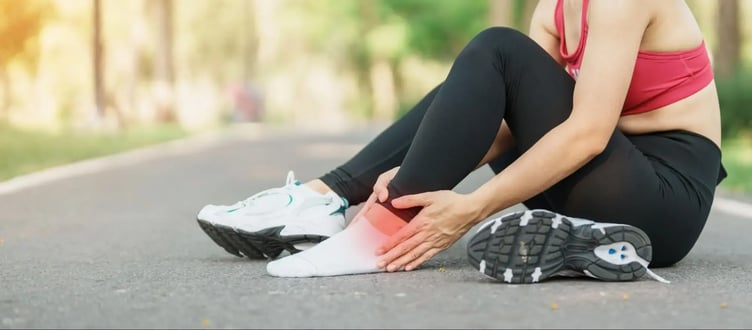
If you are dealing with an ankle sprain, your shoe choice is not optional. It directly impacts your ankle sprain recovery and whether you end up with chronic ankle instability.
Most people underestimate this and keep wearing the wrong shoes. That is how a simple sprained ankle turns into recurring ankle injuries.
Let’s fix that and explore the importance of choosing the [best shoes](https://www.anodyneshoes.com/accessories/shoes) to wear with a sprained ankle.
## Understanding Ankle Sprains
An ankle sprain usually comes from an inversion injury where the foot rolls inward and damages ligaments like the anterior talofibular ligament, calcaneofibular ligament, or posterior talofibular ligament.
This affects the ankle joint and surrounding fibrous tissue, leading to severe pain, swelling, and difficulty walking.
If you already had an ankle injury, your risk of ankle instability and re-injury is much higher. That is why ankle sprain recovery needs to be handled strategically.
## Why Shoes Matter in Ankle Sprain Recovery
During ankle sprain recovery, your goal is simple. Reduce swelling, protect the injured ankle, prevent further injury, and restore ankle stability.
Bad footwear creates excess movement and poor alignment, and forces the ankle joint to compensate. Good footwear does the opposite. It provides adequate stability, controls foot rolls, and supports proper weight bearing.
If you ignore this, you are slowing down sprained ankle recovery without realizing it.
## Best Shoes for Sprained Ankle Recovery
When choosing the best shoes for sprained ankle recovery, you should look for control and support, not softness or style.
Most brands force you to choose between comfort and stability. That trade-off is exactly what slows down ankle sprain recovery.
With [Anodyne shoes](https://www.anodyneshoes.com/), you do not have to compromise. You get support, [stability](https://www.anodyneshoes.com/shop-by-feature/motion-control-shoes) features, cushioning, and everyday-wear comfort in one [supportive shoe](https://blog.anodyneshoes.com/supportive-shoes-for-arthritic-feet), which is exactly what a sprained ankle needs to heal properly.
Here's what to look for when choosing the best shoes for sprained ankle:
### Supportive Footwear
Opt for shoes that offer ample support and stability, specifically:
- [Good arch support](https://www.anodyneshoes.com/accessories/orthopedic-shoe-inserts): Helps maintain proper foot alignment.
- **Cushioning:** Absorbs shock and reduces stress on the ankle.
- **Secure fit:** A shoe that holds the foot firmly in place prevents the ankle from shifting or rolling. Look for lace-up closures, adjustable hook-and-loop straps, or buckle systems that allow you to customize the fit around the width and volume of your foot. Slip-on styles and loose-fitting footwear offer little resistance to ankle movement and are best avoided.
- **Supportive uppers:** The material surrounding the upper foot and ankle plays a direct role in overall stability. Structured uppers made from leather, reinforced synthetics, or firm mesh hold the foot in proper position throughout the stride. Thin, flimsy, or highly flexible uppers provide minimal lateral support and allow the ankle to move beyond its safe range of motion.
- **Slight rocker bottom forefoot:** A gentle rocker sole propels the foot naturally through each step, reducing the work the foot, ankle, and surrounding joints must perform. This is particularly beneficial for those with ankle stiffness, arthritis, or a history of sprains.
- **Non-slip outsole:** A high-traction outsole grips the ground on a variety of surfaces, reducing the risk of slips and falls. Since many ankle sprains result from unexpected slips rather than athletic activity, a grippy, non-slip sole is one of the most practical protective features a shoe can offer.
Best shoes to wear with a sprained ankle from Anodyne:
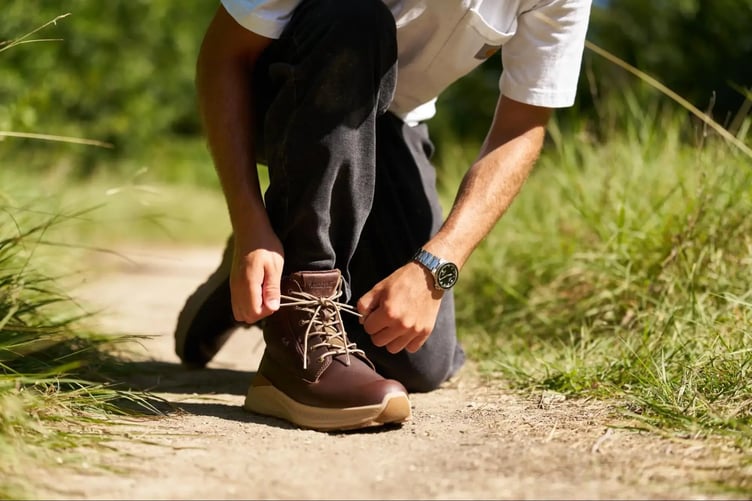
- [No. 90 Trail Worker](https://www.anodyneshoes.com/no-90-trail-worker_2?quantity=1&width=2&color=6&size=8) - these boots offer men all the comfort, stability and support they will ever need.
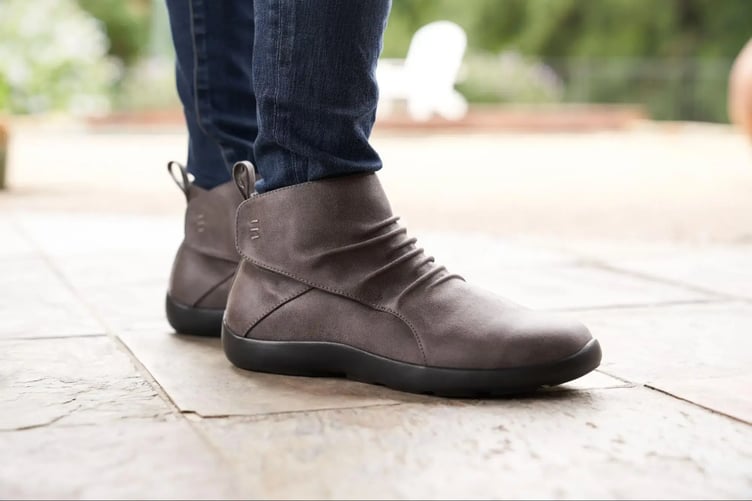
- [No. 91 Casual Boot](https://www.anodyneshoes.com/no-91-casual-boot?quantity=1&width=2&color=1&size=6) is a strong option for women who need extra support during light activity
### Avoid Tight-Fitting Shoes
Tight shoes can restrict blood flow and hinder healing. Choose shoes with a [roomy toe box](https://www.anodyneshoes.com/shop-by-feature/wide-toe-box-shoes) and adjustable laces.
### Gradually Increase Activity
As the ankle heals, gradually increase your activity level and the type of footwear you wear. Start with supportive shoes and progress to less restrictive options as tolerated.
## Preventing Ankle Sprains with the Right Shoes
While there's no guaranteed way to prevent ankle sprains entirely, the right footwear can significantly reduce your risk.
[Athletic Shoes](https://www.anodyneshoes.com/women/shoes/Athletic): Choose shoes specifically designed for your sport or exercise. These shoes offer features like:
- Motion Control: Shoes with motion-control technology help reduce excessive foot movement.
- Stability: Look for shoes with a wide base and a firm heel counter for added stability.
- Cushioning: Adequate cushioning [absorbs shock](https://www.anodyneshoes.com/accessories/orthopedic-shoe-inserts) and protects the ankle.
- Upper Support: A supportive upper can help prevent ankle rolls.
Walking Shoes: For everyday wear, opt for walking shoes with good arch support and cushioning. Avoid worn-out shoes that lack support.
Proper Fit: Ensure your shoes fit well. Shoes that are too tight or too loose can increase the risk of ankle sprains.
Strengthening Exercises: [Building ankle strength](https://blog.anodyneshoes.com/ways-to-strengthen-your-feet-and-ankles-daily) can also help prevent injuries. Consult with a physical therapist for recommended exercises.
## The Role of Movement and Recovery
Shoes alone will not fix or speed up your ankle sprain recovery.
You also need:
- [Stretching exercises](https://blog.anodyneshoes.com/national-foot-health-awareness-month-tips-for-maintaining-healthy-feet-this-spring)
- Physical therapy
- Controlled weight bearing
- Gradual return to activity
A physical therapist will guide exercises that restore normal range of motion and strengthen the ankle joint. Without this, even the best shoes for sprained ankle recovery will not save you from chronic issues.
## Common Mistakes That Slow Recovery
Avoid these common shoe mistakes to protect your ankles:
- **Wearing worn-out shoes:** Worn-out shoes lack support and increase the risk of injury. They may also contribute to ankle instability, increasing the risk of further ankle injuries.
- **Choosing fashion over function:** Stylish shoes may not provide adequate support. Proceed with caution when wearing high heels or any non-supportive footwear.
- **Ignoring pain:** If your shoes cause ankle pain, it's time for a new pair.
## Final Take
Ankle sprain recovery is not just about rest; it is about controlling movement, protecting the ankle joint, and building long-term stability.
If you choose the best shoes to wear with a sprained ankle and combine that with proper recovery, you reduce pain, improve function, and avoid chronic ankle instability. If you ignore it, you are setting yourself up for repeat injuries.
## FAQs
### What kind of ankle support should I look for during ankle sprain recovery?
You need structured ankle support that limits excessive movement without restricting natural motion of the foot and ankle. Anodyne shoes are designed to provide support through firm construction, helping the injured foot stabilize while allowing the uninjured foot to move normally. This balance is key for proper recovery.
### Can the right shoes help reduce foot pain during recovery?
Yes. [Foot pain](https://blog.anodyneshoes.com/shoes-for-foot-pain) during ankle sprain recovery often comes from poor alignment and lack of support. Shoes with firm arch support, shock absorption, and a wide toe box reduce pressure on the plantar fascia and distribute body weight evenly. This leads to real pain relief, not temporary comfort.
### Should I keep my knee slightly bent or straight when walking?
When you start to bear weight, your [knee should stay slightly bent](https://blog.anodyneshoes.com/relieving-knee-pain-with-supportive-shoes-insoles), not locked straight. This reduces stress on the affected foot and ankle joint. Good stability shoes help maintain this natural posture by keeping your alignment controlled during movement.
### Are stability shoes better than running shoes for a sprained ankle?
Yes, in most cases. Running shoes often allow more flexibility and can increase excessive movement, especially if they are not designed for support.
### What if I have flat feet or a specific foot shape?
If you have [flat feet](https://blog.anodyneshoes.com/tips-for-living-with-flat-feet) or a specific foot shape, choosing the right shoe becomes even more important. You need firm arch support and a structured base to prevent ankle instability. Anodyne shoes are designed to adapt to different foot and ankle needs without sacrificing stability.
### Do I need additional ankle support beyond shoes?
If you have weak ankles or a history of injury, [additional ankle support](https://blog.anodyneshoes.com/skeptical-about-custom-insoles-read-this-first) like a brace can help. However, your base should always be a supportive shoe.
### What features should I prioritize for good foot health?
Focus on:
- [Firm heel structure](https://blog.anodyneshoes.com/best-shoes-for-aching-heels)
- Shock absorption
- Wide toe box with about a thumb's width of space
- Snug fit around the midfoot
- Support for the [plantar fascia](https://blog.anodyneshoes.com/best-sneakers-for-plantar-fasciitis)
These features promote [good foot health](https://blog.anodyneshoes.com/daily-tips-for-maintaining-health-feet) and prevent long-term issues.
### How do I know if my shoes fit correctly during recovery?
Your shoe should feel secure without pressure. There should be space for the big toe, but no sliding inside. A snug fit prevents instability, especially when walking on uneven or slippery surfaces.
### Can I walk on uneven terrain or trail-running paths?
Not early on. Uneven terrain and trail-running conditions increase the risk of re-injury due to sudden shifts in body weight. Start on stable ground and only progress when your ankle can handle complex movements without pain.
### Should I avoid certain types of shoes completely?
Yes. Avoid:
- Flip flops
- High heels
- Unsupportive casual shoes
These do not provide support and increase stress on the injured foot and ankle.
### How does body weight affect recovery?
Every step transfers body weight through the affected foot. Without proper shock absorption and support, this slows healing and increases ankle pain. That is why the right shoe matters more than most people think.
### When should I see an ankle surgeon or healthcare provider?
If you cannot bear weight, have severe pain, or feel instability after initial recovery, consult a healthcare provider or ankle surgeon. They can assess ligament damage and guide your recovery properly.
### Do I need fitness equipment or special exercises?
You do not need complex fitness equipment, but you do need structured rehab. A physical therapist can guide you through exercises, beginning from a safe starting position and progressing gradually.
### Why is controlling excessive movement so important?
Because uncontrolled motion is what caused the injury in the first place. If your shoes do not control excessive movement, your other foot and back knee will compensate, leading to more problems beyond the ankle.
Topics: [Anodyne Blog](https://blog.anodyneshoes.com/topic/anodyne-blog), [Patient](https://blog.anodyneshoes.com/topic/patient), [Lifestyle](https://blog.anodyneshoes.com/topic/lifestyle)
.png?width=116&name=Anodyne_circle_1_logo%20(2).png)
Born and raised in the emergent city of Milwaukee, Wisconsin, Anodyne represents the core of an age-old Midwestern culture – pride, dedication and hard work. We’re a group of designers, fit experts, pedorthists, and most importantly, a group of friends that share a common goal.
### Stay up-to-date with our blog!
### Recent Posts
### Posts by Tag
- [Lifestyle (164)](https://blog.anodyneshoes.com/topic/lifestyle)
- [Patient (157)](https://blog.anodyneshoes.com/topic/patient)
- [Anodyne Blog (101)](https://blog.anodyneshoes.com/topic/anodyne-blog)
- [Recipes (46)](https://blog.anodyneshoes.com/topic/recipes)
- [Practitioner (41)](https://blog.anodyneshoes.com/topic/practitioner)
- [Diabetic Foot Care (37)](https://blog.anodyneshoes.com/topic/diabetic-foot-care)
- [Diabetes Blog (32)](https://blog.anodyneshoes.com/topic/diabetes-blog)
- [Foot Care (30)](https://blog.anodyneshoes.com/topic/foot-care)
- [Diabetic Shoes (24)](https://blog.anodyneshoes.com/topic/diabetic-shoes)
- [Diabetes Awareness (18)](https://blog.anodyneshoes.com/topic/diabetes-awareness)
- [Diabetes Diet (18)](https://blog.anodyneshoes.com/topic/diabetes-diet)
- [Custom Inserts (10)](https://blog.anodyneshoes.com/topic/custom-inserts)
- [Medicare Paperwork (9)](https://blog.anodyneshoes.com/topic/medicare-paperwork)
- [Anodyne Shoes (8)](https://blog.anodyneshoes.com/topic/anodyne-shoes)
- [Anodyne Scanner (3)](https://blog.anodyneshoes.com/topic/anodyne-scanner)
- [Neuropathy (2)](https://blog.anodyneshoes.com/topic/neuropathy)
- [Online Webinars (1)](https://blog.anodyneshoes.com/topic/online-webinars)
See all
Back to Top

-
-
-
- PRODUCTS
- [Women](https://www.anodyneshoes.com/women)
- [Men](https://www.anodyneshoes.com/men)
- [Slippers](https://www.anodyneshoes.com/accessories/orthopedic-slippers)
- [Socks](https://www.anodyneshoes.com/accessories/orthopedic-socks)
- [Sandals](https://www.anodyneshoes.com/accessories/orthopedic-sandals)
- [Inserts](https://www.anodyneshoes.com/accessories/orthopedic-shoe-insoles)
- HELP
- [Contact Us](https://www.anodyneshoes.com/contact-us)
- [FAQ](https://www.anodyneshoes.com/faq)
- [Become a Supplier](https://info.anodyneshoes.com/become-a-supplier)
- [Guest Order Status](https://www.anodyneshoes.com/guestorderstatus)
- [Shipping and Returns](https://www.anodyneshoes.com/shipping-and-returns-supplier)
- ABOUT US
- [Our Story](https://info.anodyneshoes.com/our-story)
- [Products](https://info.anodyneshoes.com/product)
- [Blog](https://blog.anodyneshoes.com/)
- [Laboratory](https://info.anodyneshoes.com/laboratory)
- LEGAL
- [Medicare](https://info.anodyneshoes.com/medicare)
- [Terms and Conditions](https://www.anodyneshoes.com/terms-and-conditions)
- [Privacy Policy](https://www.anodyneshoes.com/privacy-policy)
© 2019 Anodyne, LLC. All rights reserved.
 
```json
{
"@context" : "https://schema.org",
"@type" : "BlogPosting",
"author" : {
"@type" : "Person",
"name" : "Billy Kanter, CPED",
"url" : "https://blog.anodyneshoes.com/author/billy-kanter"
},
"dateModified" : "2026-06-12T08:33:38.005Z",
"datePublished" : "2024-09-11T17:00:00.000Z",
"headline" : "Ankle Sprain Recovery: Best Shoes For A Sprained Ankle",
"image" : [ "https://blog.anodyneshoes.com/hubfs/ankle%20sprain%20recovery.webp" ],
"mainEntityOfPage" : {
"@id" : "https://blog.anodyneshoes.com/choosing-shoes-for-ankle-sprain-recovery-prevention",
"@type" : "WebPage"
},
"publisher" : {
"@type" : "Organization",
"logo" : {
"@type" : "ImageObject",
"url" : "https://blog.anodyneshoes.com/hubfs/Anodyne_A_logo-1.png"
},
"name" : "Anodyne"
}
}
```
```json
{
"@context" : "https://schema.org",
"@type" : "FAQPage",
"mainEntity" : [ {
"@type" : "Question",
"acceptedAnswer" : {
"@type" : "Answer",
"text" : "You need structured ankle support that limits excessive movement without restricting natural motion of the foot and ankle. Anodyne shoes are designed to provide support through firm construction, helping the injured foot stabilize while allowing the uninjured foot to move normally. This balance is key for proper recovery."
},
"name" : "What kind of ankle support should I look for during ankle sprain recovery?"
}, {
"@type" : "Question",
"acceptedAnswer" : {
"@type" : "Answer",
"text" : "Yes. Foot pain during ankle sprain recovery often comes from poor alignment and lack of support. Shoes with firm arch support, shock absorption, and a wide toe box reduce pressure on the plantar fascia and distribute body weight evenly. This leads to real pain relief, not temporary comfort."
},
"name" : "Can the right shoes help reduce foot pain during recovery?"
}, {
"@type" : "Question",
"acceptedAnswer" : {
"@type" : "Answer",
"text" : "When you start to bear weight, your knee should stay slightly bent, not locked straight. This reduces stress on the affected foot and ankle joint. Good stability shoes help maintain this natural posture by keeping your alignment controlled during movement."
},
"name" : "Should I keep my knee slightly bent or straight when walking?"
}, {
"@type" : "Question",
"acceptedAnswer" : {
"@type" : "Answer",
"text" : "Yes, in most cases. Running shoes often allow more flexibility and can increase excessive movement, especially if they are not designed for support."
},
"name" : "Are stability shoes better than running shoes for a sprained ankle?"
}, {
"@type" : "Question",
"acceptedAnswer" : {
"@type" : "Answer",
"text" : "If you have flat feet or a specific foot shape, choosing the right shoe becomes even more important. You need firm arch support and a structured base to prevent ankle instability. Anodyne shoes are designed to adapt to different foot and ankle needs without sacrificing stability."
},
"name" : "What if I have flat feet or a specific foot shape?"
}, {
"@type" : "Question",
"acceptedAnswer" : {
"@type" : "Answer",
"text" : "If you have weak ankles or a history of injury, additional ankle support like a brace can help. However, your base should always be a supportive shoe."
},
"name" : "Do I need additional ankle support beyond shoes?"
}, {
"@type" : "Question",
"acceptedAnswer" : {
"@type" : "Answer",
"text" : "Focus on:\nFirm heel structure\nShock absorption\nWide toe box with about a thumb's width of space\nSnug fit around the midfoot\nSupport for the plantar fascia\nThese features promote good foot health and prevent long-term issues."
},
"name" : "What features should I prioritize for good foot health?"
}, {
"@type" : "Question",
"acceptedAnswer" : {
"@type" : "Answer",
"text" : "Your shoe should feel secure without pressure. There should be space for the big toe, but no sliding inside. A snug fit prevents instability, especially when walking on uneven or slippery surfaces."
},
"name" : "How do I know if my shoes fit correctly during recovery?"
}, {
"@type" : "Question",
"acceptedAnswer" : {
"@type" : "Answer",
"text" : "Not early on. Uneven terrain and trail-running conditions increase the risk of re-injury due to sudden shifts in body weight. Start on stable ground and only progress when your ankle can handle complex movements without pain."
},
"name" : "Can I walk on uneven terrain or trail-running paths?"
}, {
"@type" : "Question",
"acceptedAnswer" : {
"@type" : "Answer",
"text" : "Yes. Avoid:\nFlip flops\nHigh heels\nUnsupportive casual shoes\nThese do not provide support and increase stress on the injured foot and ankle."
},
"name" : "Should I avoid certain types of shoes completely?"
}, {
"@type" : "Question",
"acceptedAnswer" : {
"@type" : "Answer",
"text" : "Every step transfers body weight through the affected foot. Without proper shock absorption and support, this slows healing and increases ankle pain. That is why the right shoe matters more than most people think."
},
"name" : "How does body weight affect recovery?"
}, {
"@type" : "Question",
"acceptedAnswer" : {
"@type" : "Answer",
"text" : "If you cannot bear weight, have severe pain, or feel instability after initial recovery, consult a healthcare provider or ankle surgeon. They can assess ligament damage and guide your recovery properly."
},
"name" : "When should I see an ankle surgeon or healthcare provider?"
}, {
"@type" : "Question",
"acceptedAnswer" : {
"@type" : "Answer",
"text" : "You do not need complex fitness equipment, but you do need structured rehab. A physical therapist can guide you through exercises, beginning from a safe starting position and progressing gradually."
},
"name" : "Do I need fitness equipment or special exercises?"
}, {
"@type" : "Question",
"acceptedAnswer" : {
"@type" : "Answer",
"text" : "Because uncontrolled motion is what caused the injury in the first place. If your shoes do not control excessive movement, your other foot and back knee will compensate, leading to more problems beyond the ankle."
},
"name" : "Why is controlling excessive movement so important?"
} ]
}
```