---
title: "Best Foot Soak Recipe Ideas: Epsom Salt Foot Soak & More"
description: Treat tired feet with a homemade foot soak. Discover the best foot soak recipe options, including a relaxing Epsom salt foot soak and an apple cider one.
image: https://blog.anodyneshoes.com/hubfs/2-Aug-19-2024-05-50-01-1034-PM.png
---
Free Shipping!
- [Login](https://www.anodyneshoes.com/scs/checkout.ssp?is=login&login=T&fragment=login-register&_ga=2.139944311.594202185.1705327965-1966822928.1699636057#login-register)
- or [Register](https://www.anodyneshoes.com/scs/checkout.ssp?is=register&login=T&reset=T&newcust=T&fragment=login-register&client_id=1199613585.1708380270&session_id=1719409087&_ga=2.45544804.1172352323.1719240659-1199613585.1708380270&_gac=1.258274936.1716234967.Cj0KCQjw8pKxBhD_ARIsAPrG45k9qU5DfAG8y_1QdNe8IHWhfV_eqn7H2BBlnEOM62vuRDJpu_0TWhsaAuXdEALw_wcB#login-register)
[](http://www.anodyneshoes.com/)
- [WOMEN](https://www.anodyneshoes.com/women)
- [Shoes](https://www.anodyneshoes.com/women/shoes)
- [Sport](https://www.anodyneshoes.com/women/shoes/sport)
- [Trail](https://www.anodyneshoes.com/women/shoes/trail)
- [Casual](https://www.anodyneshoes.com/women/shoes/Casual)
- [Slippers](https://www.anodyneshoes.com/women/slippers)
- [Sandals](https://www.anodyneshoes.com/women/sandals)
- [Socks](https://www.anodyneshoes.com/women/socks)
- [Insoles](https://www.anodyneshoes.com/women/insoles)
- [Multi Density Orthotics](https://www.anodyneshoes.com/women/insoles/womens-multi-density-orthotics)
- [Gel Insoles](https://www.anodyneshoes.com/women/insoles/gel-insoles)
- [Rx Inserts](https://www.anodyneshoes.com/women/insoles/rx-insoles)
- [MEN](https://www.anodyneshoes.com/men)
- [Shoes](https://www.anodyneshoes.com/men/shoes)
- [Sport](https://www.anodyneshoes.com/men/shoes/sport)
- [Trail](https://www.anodyneshoes.com/men/shoes/trail)
- [Casual](https://www.anodyneshoes.com/men/shoes/Casual)
- [Slippers](https://www.anodyneshoes.com/men/slippers)
- [Sandals](https://www.anodyneshoes.com/men/sandals)
- [Socks](https://www.anodyneshoes.com/men/socks)
- [Insoles](https://www.anodyneshoes.com/men/insoles)
- [Multi Density Orthotics](https://www.anodyneshoes.com/men/insoles/mens-multi-density-orthotics)
- [Gel Insoles](https://www.anodyneshoes.com/men/insoles/gel-insoles)
- [Rx Insoles](https://www.anodyneshoes.com/men/insoles/rx-insoles)
- [ALL](https://www.anodyneshoes.com/accessories)
- [Shoes](https://www.anodyneshoes.com/accessories/shoes)
- [Slippers](https://www.anodyneshoes.com/accessories/orthopedic-slippers)
- [Sandals](https://www.anodyneshoes.com/accessories/orthopedic-sandals)
- [Socks](https://www.anodyneshoes.com/accessories/orthopedic-socks)
- [Diabetic Socks](https://www.anodyneshoes.com/accessories/orthopedic-socks/diabetic-socks)
- [Bunion Socks](https://www.anodyneshoes.com/accessories/orthopedic-socks/bunion-socks)
- [Insoles](https://www.anodyneshoes.com/accessories/orthopedic-shoe-insoles)
- [Multi Density Orthotics](https://www.anodyneshoes.com/accessories/orthopedic-shoe-insoles/multi-density-orthotics)
- [Gel Insoles](https://www.anodyneshoes.com/accessories/orthopedic-shoe-insoles/gel-insoles)
- [Rx Insoles](https://www.anodyneshoes.com/accessories/orthopedic-shoe-insoles/rx-insoles)
- [Shoe Care](https://www.anodyneshoes.com/accessories/shoe-care)
- [Education](https://www.anodyneshoes.com/accessories/Education)
- [Supplier](https://www.anodyneshoes.com/accessories/supplier)
- [Displays](https://www.anodyneshoes.com/accessories/supplier/displays)
- [Collateral](https://www.anodyneshoes.com/accessories/supplier/collateral)
- [Impression Foam](https://www.anodyneshoes.com/accessories/supplier/impression-foam)
- [SHOP CONDITIONS](https://www.anodyneshoes.com/shop-by-condition)
- [Diabetes](https://www.anodyneshoes.com/shop-by-condition/diabetic-shoes)
- [Neuropathy](https://www.anodyneshoes.com/shop-by-condition/shoes-for-neuropathy)
- [Bunions](https://www.anodyneshoes.com/shop-by-condition/shoes-for-bunions)
- [Swollen Feet](https://www.anodyneshoes.com/shop-by-condition/shoes-for-swollen-feet)
- [Hammertoe](https://www.anodyneshoes.com/shop-by-condition/shoes-for-hammertoe)
- [Heel Pain](https://www.anodyneshoes.com/shop-by-condition/shoes-for-heel-pain)
- [Plantar Fasciitis](https://www.anodyneshoes.com/shop-by-condition/shoes-for-plantar-fasciitis)
- [Flat Feet](https://www.anodyneshoes.com/shop-by-condition/shoes-for-flat-feet)
- [Heel Spurs](https://www.anodyneshoes.com/shop-by-condition/shoes-for-heel-spurs)
- [Charcot Foot](https://www.anodyneshoes.com/shop-by-condition/shoes-for-charcot-foot)
- [SHOP FEATURES](https://www.anodyneshoes.com/shop-by-feature)
- [Slip-Resistant Shoes](https://www.anodyneshoes.com/shop-by-feature/slip-resistant-shoes)
- [Arch Support Shoes](https://www.anodyneshoes.com/shop-by-feature/arch-support-shoes)
- [Strap Closure Shoes](https://www.anodyneshoes.com/shop-by-feature/strap-closure-shoes)
- [Therapeutic Shoes](https://www.anodyneshoes.com/shop-by-feature/therapeutic-shoes)
- [No Tie Lace Shoes](https://www.anodyneshoes.com/shop-by-feature/no-tie-lace-shoes)
- [Vegan Friendly Shoes](https://www.anodyneshoes.com/shop-by-feature/vegan-friendly-shoes)
- [Extra Wide Shoes](https://www.anodyneshoes.com/shop-by-feature/extra-wide-shoes)
- [Shoes for AFO's & Braces](https://www.anodyneshoes.com/shop-by-feature/shoes-for-afos-braces)
- [Wide Toe Box Shoes](https://www.anodyneshoes.com/shop-by-feature/wide-toe-box-shoes)
- [Stretchable Shoes](https://www.anodyneshoes.com/shop-by-feature/stretchable-shoes)
- [Extra Depth Shoes](https://www.anodyneshoes.com/shop-by-feature/extra-depth-shoes)
- [Double Depth Shoes](https://www.anodyneshoes.com/shop-by-feature/double-depth-shoes)
- [Shoes With Removable Inserts](https://www.anodyneshoes.com/shop-by-feature/shoes-with-removable-inserts)
- [Motion Control Shoes](https://www.anodyneshoes.com/shop-by-feature/motion-control-shoes)
- [Shoes With Heel Counter Stability](https://www.anodyneshoes.com/shop-by-feature/shoes-with-heel-counter-stability)
- [LOCATIONS](https://www.anodyneshoes.com/locations)
- [ABOUT US](https://info.anodyneshoes.com/our-story)
- [Our Story](https://info.anodyneshoes.com/our-story)
- [Our Products](https://info.anodyneshoes.com/product)
- [Our Lab](https://info.anodyneshoes.com/laboratory)
- [Our Blog](https://blog.anodyneshoes.com)
-
-
-
Go
# Best DIY Recipes for Natural Foot Soaks & Treatments
Posted by [Billy Kanter, CPED](https://blog.anodyneshoes.com/author/billy-kanter) on Sep 18, 2024, 12:00:00 PM

Find me on:
[LinkedIn](https://www.linkedin.com/in/billy-kanter-a73b74101/)
- [Tweet](https://twitter.com/share)
Tired, achy feet deserve some serious pampering! There’s nothing quite like indulging in a luxurious foot soak to unwind and rejuvenate after a long day.
But who says you need to splurge on an expensive salon visit? With a few simple ingredients, you can create your own tranquil oasis right at home. Let’s dive into the world of homemade foot soak treatments!
## Why Treat Your Feet?
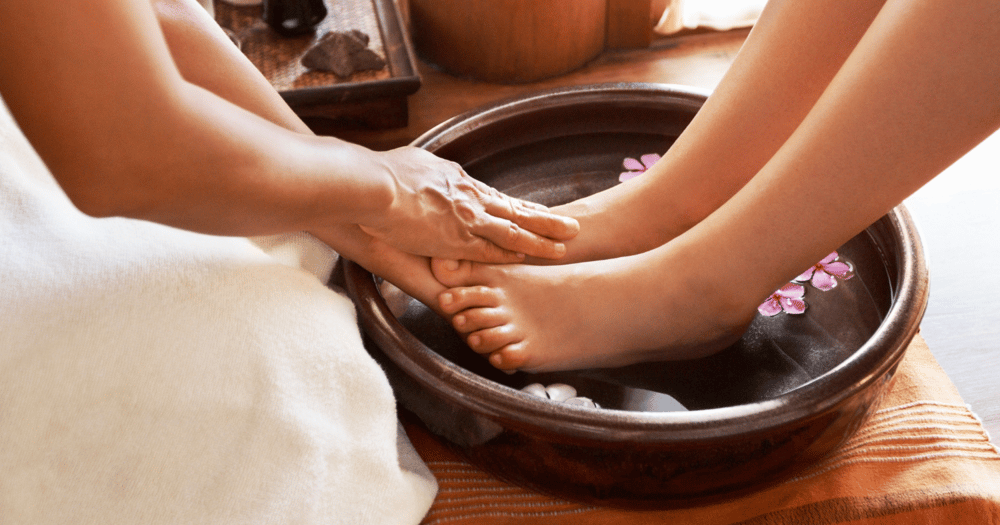
Our feet carry us through our day, enduring pressure, stress, and muscle tension. Taking good care of your overall foot health is important for feeling good all over. A foot soak offers numerous potential benefits, including:
- **Relaxation:** Soaking your feet in warm water can help relieve tension and stress.
- **Exfoliation:** Removing dead skin cells leaves your feet feeling soft and smooth.
- Softening: The right foot soak recipe can soften dry skin and [cracked heels](https://blog.anodyneshoes.com/cracked-heel-treatment).
- **Detoxification:** Some foot soaks can help draw out toxins.
## Creating Your Home Spa Atmosphere
To enhance your foot soak experience and promote mental clarity, set the mood:
- **Choose a relaxing spot:** Find a quiet, comfortable area where you won’t be disturbed.
- **Soft lighting:** Dim the lights or use candles for a soothing ambiance.
- **Soothing music:** Play gentle music to promote relaxation.
- **Plush towels:** Have soft towels ready to dry your feet.
- **Lotions and creams:** Select your favorite foot lotions or creams for post-spa pampering.
## DIY Foot Soak Recipes
1\. Epsom Salt Foot Soak:
- Combine 1 cup Epsom salt with warm water in a large basin.
- Soak your feet for 15-20 minutes. Epsom salt helps relieve muscle soreness and draw out toxins.
2\. Lavender and Peppermint Refreshing Foot Soak:
- Mix 1/2 cup Epsom salt, a few drops of lavender and peppermint essential oils, and warm water.
- Lavender promotes while peppermint invigorates tired feet.
3\. Detoxifying Apple Cider Vinegar Foot Soak:
- Combine 1/2 cup apple cider vinegar with warm water.
- Apple cider vinegar has antibacterial properties and can help balance pH levels.
4\. Soothing Oatmeal Foot Soak:
- Blend oatmeal into a fine powder. Add to warm water for a creamy soak.
- Oatmeal soothes the skin and relieves itchiness.
## DIY Foot Scrub
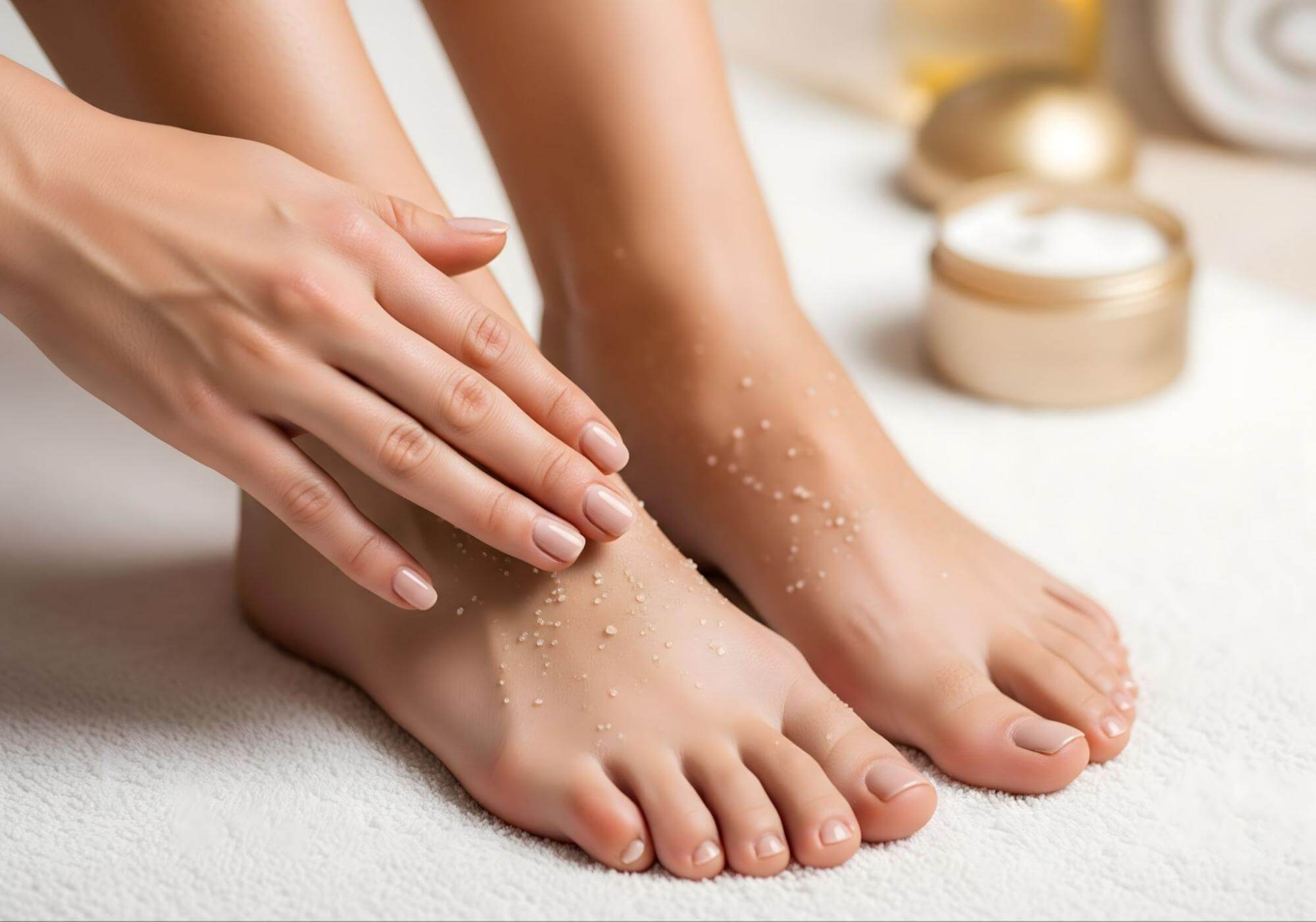
Exfoliate rough skin with this homemade foot scrub:
- Combine 1/4 cup brown sugar, 2 tablespoons olive oil, and a few drops of your favorite essential oil.
- Gently scrub your feet in circular motions, focusing on rough areas.
## Deep Conditioning Foot Mask
Pamper your feet with a hydrating mask:
- Mix 1/4 cup avocado or coconut oil with a tablespoon of honey.
- Apply the mixture to clean, dry feet.
- Cover your feet with plastic wrap and let it sit for 15-20 minutes.
- Rinse with warm water and moisturize.
## Post-Spa Foot Massage
Finish your spa session with a relaxing foot massage. Use a lotion or oil to hydrate your skin while massaging your feet and ankles in circular motions.
## Tips for Healthy Feet
- [Keep your feet clean and dry.](https://blog.anodyneshoes.com/why-people-with-diabetes-need-to-keep-their-feet-dry)
- Wear well-fitting shoes.
- Moisturize your feet daily.
- Trim toenails straight across.
- Avoid walking barefoot in public areas.
- Always check water temperature (ensure it is lukewarm water, not hot water) to avoid burns, especially if you cannot feel heat due to nerve damage.
- If you have open wounds, open sores, poor circulation, or diabetes, consult a healthcare provider or health care professional before trying a foot soak.
Indulge in regular at-home foot spa treatments to keep your feet happy and [healthy](https://blog.anodyneshoes.com/national-foot-health-awareness-month-tips-for-maintaining-healthy-feet-this-spring). Remember, consistency is key! Enjoy the relaxation and rejuvenation that come with this simple yet effective self-care ritual.
## Essential Foot Care for Diabetics
People with diabetes should skip prolonged foot soaks, as they dry the skin, promote cracking, and heighten infection risk. Instead of foot soaks, gently wash daily with mild soap and lukewarm water, dry carefully (especially between toes), and apply lotion to tops and soles only.
Always follow your doctor's prescription for foot care and consult one before trying any routine.
## Step Into Comfort with Anodyne
After you’ve treated your feet to a relaxing foot soak, give them the support they need all day long. [Anodyne](https://www.anodyneshoes.com/) offers premier orthopedic footwear designed to keep your feet healthy, comfortable, and [pain-free](https://blog.anodyneshoes.com/shoes-for-foot-pain). Whether you need protection for [diabetes](https://www.anodyneshoes.com/shop-by-condition/diabetic-shoes) or [extra depth](https://www.anodyneshoes.com/shop-by-feature/extra-depth-shoes) for swelling, our shoes are the perfect finish to your foot care routine.
[\[Shop Anodyne Shoes Today for Unmatched Comfort\]](https://www.anodyneshoes.com/accessories/shoes)
## Frequently Asked Questions
### How often should I use a foot soak recipe?
You can generally soak your feet 1-2 times a week. However, if you are using ingredients like vinegar or baking soda instructions often, monitor for skin sensitivity. Regular soaking is great for your self care routine.
### Can an Epsom salt foot soak help with infections?
While an Epsom salt foot soak is excellent for sore muscles, ingredients like tea tree oil or an apple cider vinegar foot soak are better suited for issues like athlete's foot due to their antifungal properties. However, there is not always strong evidence for [home remedies](https://blog.anodyneshoes.com/natural-remedies-for-swollen-feet-and-ankles) curing severe infections; see a doctor for persistent problems.
### Do I need a special foot bath machine?
No, you can simply use two containers or a standard basin. The most important part is the ingredients, like bath salts or pure essential oils, and maintaining a comfortable body temperature for the water.
### What is the best way to care for sensitive skin during a soak?
If you have sensitive skin, be careful when adding essential oils; always mix them with a carrier oil (like coconut or olive oil) before putting them in the water. This keeps your skin hydrated and prevents irritation. After your soak, use a clean towel to pat dry your foot completely, especially between the toes, to prevent bacteria from thriving in the moisture.
### Can a foot soak help with infections or nail problems?
Yes, a foot soak may help improve hygiene which combats foot odor and fungal infections, including fungal nail issues. Softening the skin can also make it easier to manage ingrown toenails safely. However, never force an ingrown nail; simply soak to reduce inflammation. If you have an infection on one foot, be careful not to cross-contaminate the other foot.
### How does soaking relieve pain and swelling?
Soaking is excellent for sore feet and muscle aches because the warm water dilates blood vessels, which improves blood flow to ease pain. This increased circulation helps reduce swelling in tired extremities. To maximize these health benefits, you can gently use a pumice stone on rough areas to release tension, but be gentle to avoid damaging the skin.
### What is the best way to care for sensitive skin during a soak?
If you have sensitive skin, be careful when adding essential oils; always mix them with a carrier oil (like coconut or olive oil) before putting them in the water. This keeps your skin hydrated and prevents irritation. After your soak, use a clean towel to pat dry your foot completely, especially between the toes, to prevent bacteria from thriving in the moisture.
Topics: [Anodyne Blog](https://blog.anodyneshoes.com/topic/anodyne-blog), [Patient](https://blog.anodyneshoes.com/topic/patient), [Lifestyle](https://blog.anodyneshoes.com/topic/lifestyle)
.png?width=116&name=Anodyne_circle_1_logo%20(2).png)
Born and raised in the emergent city of Milwaukee, Wisconsin, Anodyne represents the core of an age-old Midwestern culture – pride, dedication and hard work. We’re a group of designers, fit experts, pedorthists, and most importantly, a group of friends that share a common goal.
### Stay up-to-date with our blog!
### Recent Posts
### Posts by Tag
- [Lifestyle (164)](https://blog.anodyneshoes.com/topic/lifestyle)
- [Patient (157)](https://blog.anodyneshoes.com/topic/patient)
- [Anodyne Blog (101)](https://blog.anodyneshoes.com/topic/anodyne-blog)
- [Recipes (46)](https://blog.anodyneshoes.com/topic/recipes)
- [Practitioner (41)](https://blog.anodyneshoes.com/topic/practitioner)
- [Diabetic Foot Care (37)](https://blog.anodyneshoes.com/topic/diabetic-foot-care)
- [Diabetes Blog (32)](https://blog.anodyneshoes.com/topic/diabetes-blog)
- [Foot Care (30)](https://blog.anodyneshoes.com/topic/foot-care)
- [Diabetic Shoes (24)](https://blog.anodyneshoes.com/topic/diabetic-shoes)
- [Diabetes Awareness (18)](https://blog.anodyneshoes.com/topic/diabetes-awareness)
- [Diabetes Diet (18)](https://blog.anodyneshoes.com/topic/diabetes-diet)
- [Custom Inserts (10)](https://blog.anodyneshoes.com/topic/custom-inserts)
- [Medicare Paperwork (9)](https://blog.anodyneshoes.com/topic/medicare-paperwork)
- [Anodyne Shoes (8)](https://blog.anodyneshoes.com/topic/anodyne-shoes)
- [Anodyne Scanner (3)](https://blog.anodyneshoes.com/topic/anodyne-scanner)
- [Neuropathy (2)](https://blog.anodyneshoes.com/topic/neuropathy)
- [Online Webinars (1)](https://blog.anodyneshoes.com/topic/online-webinars)
See all
Back to Top

-
-
-
- PRODUCTS
- [Women](https://www.anodyneshoes.com/women)
- [Men](https://www.anodyneshoes.com/men)
- [Slippers](https://www.anodyneshoes.com/accessories/orthopedic-slippers)
- [Socks](https://www.anodyneshoes.com/accessories/orthopedic-socks)
- [Sandals](https://www.anodyneshoes.com/accessories/orthopedic-sandals)
- [Inserts](https://www.anodyneshoes.com/accessories/orthopedic-shoe-insoles)
- HELP
- [Contact Us](https://www.anodyneshoes.com/contact-us)
- [FAQ](https://www.anodyneshoes.com/faq)
- [Become a Supplier](https://info.anodyneshoes.com/become-a-supplier)
- [Guest Order Status](https://www.anodyneshoes.com/guestorderstatus)
- [Shipping and Returns](https://www.anodyneshoes.com/shipping-and-returns-supplier)
- ABOUT US
- [Our Story](https://info.anodyneshoes.com/our-story)
- [Products](https://info.anodyneshoes.com/product)
- [Blog](https://blog.anodyneshoes.com/)
- [Laboratory](https://info.anodyneshoes.com/laboratory)
- LEGAL
- [Medicare](https://info.anodyneshoes.com/medicare)
- [Terms and Conditions](https://www.anodyneshoes.com/terms-and-conditions)
- [Privacy Policy](https://www.anodyneshoes.com/privacy-policy)
© 2019 Anodyne, LLC. All rights reserved.
```json
{
"@context" : "https://schema.org",
"@type" : "BlogPosting",
"author" : {
"@type" : "Person",
"name" : "Billy Kanter, CPED",
"url" : "https://blog.anodyneshoes.com/author/billy-kanter"
},
"dateModified" : "2026-02-22T23:18:51.931Z",
"datePublished" : "2024-09-18T17:00:00.000Z",
"headline" : "Best Foot Soak Recipe Ideas: Epsom Salt Foot Soak & More",
"image" : [ "https://blog.anodyneshoes.com/hubfs/2-Aug-19-2024-05-50-01-1034-PM.png" ],
"mainEntityOfPage" : {
"@id" : "https://blog.anodyneshoes.com/diy-recipe-for-natural-foot-soaks-treatments",
"@type" : "WebPage"
},
"publisher" : {
"@type" : "Organization",
"logo" : {
"@type" : "ImageObject",
"url" : "https://blog.anodyneshoes.com/hubfs/Anodyne_A_logo-1.png"
},
"name" : "Anodyne"
}
}
```
```json
{
"@context" : "https://schema.org",
"@type" : "FAQPage",
"mainEntity" : [ {
"@type" : "Question",
"acceptedAnswer" : {
"@type" : "Answer",
"text" : "You can generally soak your feet 1-2 times a week. However, if you are using ingredients like vinegar or baking soda instructions often, monitor for skin sensitivity. Regular soaking is great for your self care routine."
},
"name" : "How often should I use a foot soak recipe?"
}, {
"@type" : "Question",
"acceptedAnswer" : {
"@type" : "Answer",
"text" : "While an Epsom salt foot soak is excellent for sore muscles, ingredients like tea tree oil or an apple cider vinegar foot soak are better suited for issues like athlete's foot due to their antifungal properties. However, there is not always strong evidence for home remedies curing severe infections; see a doctor for persistent problems."
},
"name" : "Can an Epsom salt foot soak help with infections?"
}, {
"@type" : "Question",
"acceptedAnswer" : {
"@type" : "Answer",
"text" : "No, you can simply use two containers or a standard basin. The most important part is the ingredients, like bath salts or pure essential oils, and maintaining a comfortable body temperature for the water."
},
"name" : "Do I need a special foot bath machine?"
}, {
"@type" : "Question",
"acceptedAnswer" : {
"@type" : "Answer",
"text" : "If you have sensitive skin, be careful when adding essential oils; always mix them with a carrier oil (like coconut or olive oil) before putting them in the water. This keeps your skin hydrated and prevents irritation. After your soak, use a clean towel to pat dry your foot completely, especially between the toes, to prevent bacteria from thriving in the moisture."
},
"name" : "What is the best way to care for sensitive skin during a soak?"
}, {
"@type" : "Question",
"acceptedAnswer" : {
"@type" : "Answer",
"text" : "Yes, a foot soak may help improve hygiene which combats foot odor and fungal infections, including fungal nail issues. Softening the skin can also make it easier to manage ingrown toenails safely. However, never force an ingrown nail; simply soak to reduce inflammation. If you have an infection on one foot, be careful not to cross-contaminate the other foot."
},
"name" : "Can a foot soak help with infections or nail problems?"
}, {
"@type" : "Question",
"acceptedAnswer" : {
"@type" : "Answer",
"text" : "Soaking is excellent for sore feet and muscle aches because the warm water dilates blood vessels, which improves blood flow to ease pain. This increased circulation helps reduce swelling in tired extremities. To maximize these health benefits, you can gently use a pumice stone on rough areas to release tension, but be gentle to avoid damaging the skin."
},
"name" : "How does soaking relieve pain and swelling?"
} ]
}
```