---
title: "Motion Control Shoes: Signs You Might Need Them"
description: Motion control shoes limit excess inward roll. Learn the signs of overpronation, how they differ from stability shoes, and who actually needs them.
image: https://blog.anodyneshoes.com/hubfs/Anodyne%20motion%20control%20shoes.webp
---
Free Shipping!
- [Login](https://www.anodyneshoes.com/scs/checkout.ssp?is=login&login=T&fragment=login-register&_ga=2.139944311.594202185.1705327965-1966822928.1699636057#login-register)
- or [Register](https://www.anodyneshoes.com/scs/checkout.ssp?is=register&login=T&reset=T&newcust=T&fragment=login-register&client_id=1199613585.1708380270&session_id=1719409087&_ga=2.45544804.1172352323.1719240659-1199613585.1708380270&_gac=1.258274936.1716234967.Cj0KCQjw8pKxBhD_ARIsAPrG45k9qU5DfAG8y_1QdNe8IHWhfV_eqn7H2BBlnEOM62vuRDJpu_0TWhsaAuXdEALw_wcB#login-register)
[](http://www.anodyneshoes.com/)
- [WOMEN](https://www.anodyneshoes.com/women)
- [Shoes](https://www.anodyneshoes.com/women/shoes)
- [Sport](https://www.anodyneshoes.com/women/shoes/sport)
- [Trail](https://www.anodyneshoes.com/women/shoes/trail)
- [Casual](https://www.anodyneshoes.com/women/shoes/Casual)
- [Slippers](https://www.anodyneshoes.com/women/slippers)
- [Sandals](https://www.anodyneshoes.com/women/sandals)
- [Socks](https://www.anodyneshoes.com/women/socks)
- [Insoles](https://www.anodyneshoes.com/women/insoles)
- [Multi Density Orthotics](https://www.anodyneshoes.com/women/insoles/womens-multi-density-orthotics)
- [Gel Insoles](https://www.anodyneshoes.com/women/insoles/gel-insoles)
- [Rx Inserts](https://www.anodyneshoes.com/women/insoles/rx-insoles)
- [MEN](https://www.anodyneshoes.com/men)
- [Shoes](https://www.anodyneshoes.com/men/shoes)
- [Sport](https://www.anodyneshoes.com/men/shoes/sport)
- [Trail](https://www.anodyneshoes.com/men/shoes/trail)
- [Casual](https://www.anodyneshoes.com/men/shoes/Casual)
- [Slippers](https://www.anodyneshoes.com/men/slippers)
- [Sandals](https://www.anodyneshoes.com/men/sandals)
- [Socks](https://www.anodyneshoes.com/men/socks)
- [Insoles](https://www.anodyneshoes.com/men/insoles)
- [Multi Density Orthotics](https://www.anodyneshoes.com/men/insoles/mens-multi-density-orthotics)
- [Gel Insoles](https://www.anodyneshoes.com/men/insoles/gel-insoles)
- [Rx Insoles](https://www.anodyneshoes.com/men/insoles/rx-insoles)
- [ALL](https://www.anodyneshoes.com/accessories)
- [Shoes](https://www.anodyneshoes.com/accessories/shoes)
- [Slippers](https://www.anodyneshoes.com/accessories/orthopedic-slippers)
- [Sandals](https://www.anodyneshoes.com/accessories/orthopedic-sandals)
- [Socks](https://www.anodyneshoes.com/accessories/orthopedic-socks)
- [Diabetic Socks](https://www.anodyneshoes.com/accessories/orthopedic-socks/diabetic-socks)
- [Bunion Socks](https://www.anodyneshoes.com/accessories/orthopedic-socks/bunion-socks)
- [Insoles](https://www.anodyneshoes.com/accessories/orthopedic-shoe-insoles)
- [Multi Density Orthotics](https://www.anodyneshoes.com/accessories/orthopedic-shoe-insoles/multi-density-orthotics)
- [Gel Insoles](https://www.anodyneshoes.com/accessories/orthopedic-shoe-insoles/gel-insoles)
- [Rx Insoles](https://www.anodyneshoes.com/accessories/orthopedic-shoe-insoles/rx-insoles)
- [Shoe Care](https://www.anodyneshoes.com/accessories/shoe-care)
- [Education](https://www.anodyneshoes.com/accessories/Education)
- [Supplier](https://www.anodyneshoes.com/accessories/supplier)
- [Displays](https://www.anodyneshoes.com/accessories/supplier/displays)
- [Collateral](https://www.anodyneshoes.com/accessories/supplier/collateral)
- [Impression Foam](https://www.anodyneshoes.com/accessories/supplier/impression-foam)
- [SHOP CONDITIONS](https://www.anodyneshoes.com/shop-by-condition)
- [Diabetes](https://www.anodyneshoes.com/shop-by-condition/diabetic-shoes)
- [Neuropathy](https://www.anodyneshoes.com/shop-by-condition/shoes-for-neuropathy)
- [Bunions](https://www.anodyneshoes.com/shop-by-condition/shoes-for-bunions)
- [Swollen Feet](https://www.anodyneshoes.com/shop-by-condition/shoes-for-swollen-feet)
- [Hammertoe](https://www.anodyneshoes.com/shop-by-condition/shoes-for-hammertoe)
- [Heel Pain](https://www.anodyneshoes.com/shop-by-condition/shoes-for-heel-pain)
- [Plantar Fasciitis](https://www.anodyneshoes.com/shop-by-condition/shoes-for-plantar-fasciitis)
- [Flat Feet](https://www.anodyneshoes.com/shop-by-condition/shoes-for-flat-feet)
- [Heel Spurs](https://www.anodyneshoes.com/shop-by-condition/shoes-for-heel-spurs)
- [Charcot Foot](https://www.anodyneshoes.com/shop-by-condition/shoes-for-charcot-foot)
- [SHOP FEATURES](https://www.anodyneshoes.com/shop-by-feature)
- [Slip-Resistant Shoes](https://www.anodyneshoes.com/shop-by-feature/slip-resistant-shoes)
- [Arch Support Shoes](https://www.anodyneshoes.com/shop-by-feature/arch-support-shoes)
- [Strap Closure Shoes](https://www.anodyneshoes.com/shop-by-feature/strap-closure-shoes)
- [Therapeutic Shoes](https://www.anodyneshoes.com/shop-by-feature/therapeutic-shoes)
- [No Tie Lace Shoes](https://www.anodyneshoes.com/shop-by-feature/no-tie-lace-shoes)
- [Vegan Friendly Shoes](https://www.anodyneshoes.com/shop-by-feature/vegan-friendly-shoes)
- [Extra Wide Shoes](https://www.anodyneshoes.com/shop-by-feature/extra-wide-shoes)
- [Shoes for AFO's & Braces](https://www.anodyneshoes.com/shop-by-feature/shoes-for-afos-braces)
- [Wide Toe Box Shoes](https://www.anodyneshoes.com/shop-by-feature/wide-toe-box-shoes)
- [Stretchable Shoes](https://www.anodyneshoes.com/shop-by-feature/stretchable-shoes)
- [Extra Depth Shoes](https://www.anodyneshoes.com/shop-by-feature/extra-depth-shoes)
- [Double Depth Shoes](https://www.anodyneshoes.com/shop-by-feature/double-depth-shoes)
- [Shoes With Removable Inserts](https://www.anodyneshoes.com/shop-by-feature/shoes-with-removable-inserts)
- [Motion Control Shoes](https://www.anodyneshoes.com/shop-by-feature/motion-control-shoes)
- [Shoes With Heel Counter Stability](https://www.anodyneshoes.com/shop-by-feature/shoes-with-heel-counter-stability)
- [LOCATIONS](https://www.anodyneshoes.com/locations)
- [ABOUT US](https://info.anodyneshoes.com/our-story)
- [Our Story](https://info.anodyneshoes.com/our-story)
- [Our Products](https://info.anodyneshoes.com/product)
- [Our Lab](https://info.anodyneshoes.com/laboratory)
- [Our Blog](https://blog.anodyneshoes.com)
-
-
-
Go
# Do You Need Motion Control Shoes? Signs to Watch For
Posted by [Billy Kanter, CPED](https://blog.anodyneshoes.com/author/billy-kanter) on Aug 2, 2026, 7:02:14 PM

Find me on:
[LinkedIn](https://www.linkedin.com/in/billy-kanter-a73b74101/)
- [Tweet](https://twitter.com/share)
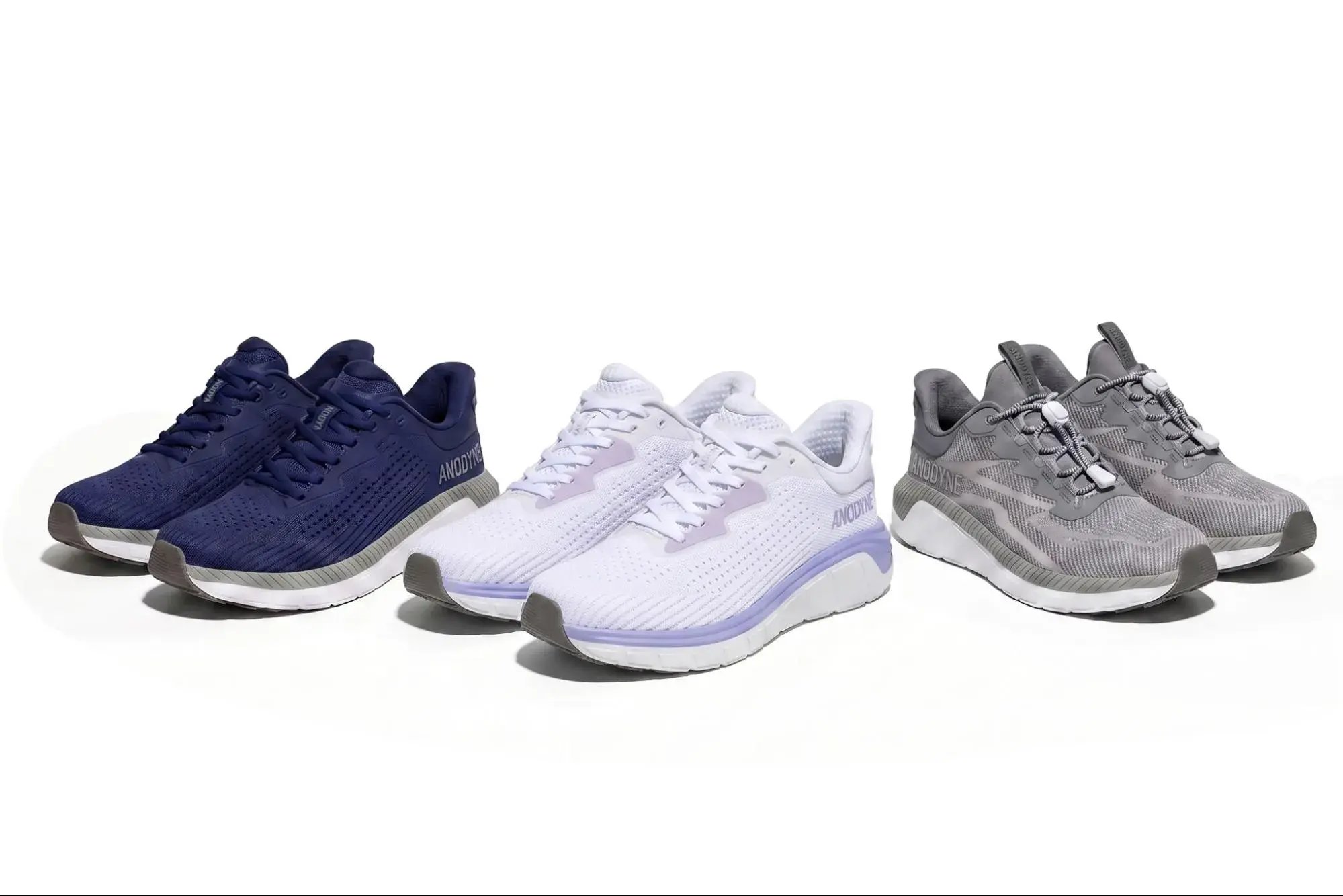
Pick up your oldest pair of shoes and turn them over. If the inside edge of the heel is worn smooth while the outside still looks new, your feet are telling you something.
That wear pattern is one of the clearest signs of overpronation, and it is often the first clue that motion control shoes belong on your shortlist. Most people do not need them. Motion control shoes solve a specific problem, and putting them on the wrong feet tends to create new ones.
Here is how to tell which group you fall into and some of the best motion control shoes you can pick.
## What Motion Control Shoes Actually Do
Every foot rolls inward slightly after the heel lands. That roll is pronation, and it helps your foot absorb shock. Overpronation happens when the roll goes too far or lasts too long, leaving the arch collapsed and the ankle tilted inward through the middle of your stride.
The best motion control shoes resist that movement through construction, not cushioning. Look for a firm medial post in the midsole, a rigid heel counter that grips the back of the heel, a straight last, and a broad, durable outsole. A stiff shank runs through the midfoot so the sole resists twisting. The result is a heavier, firmer shoe that holds its shape under load.
If you want to see how these parts fit together, read [the anatomy of an orthopedic shoe](https://blog.anodyneshoes.com/blog.anodyneshoes.com/the-anatomy-and-features-of-orthopedic-shoes).
## Six Signs Your Feet May Need More Support
No single sign settles the question. Three or more together are worth acting on.
1. Uneven wear on the inside edge. The inner heel and the ball of the foot break down first while the outer sole stays intact.
2. Ankles that tilt inward. Stand barefoot in front of a mirror. If your ankles lean toward each other and your arches sag, you likely pronate more than average.
3. Arch and inner-heel pain that builds through the day. Morning feels fine. By evening, the arch aches. [Pinpointing where your foot pain sits](https://blog.anodyneshoes.com/painful-feet-guide) helps narrow the cause.
4. Aching knees, shins, or hips after walking. Excess rolling travels up the leg. Many people trace [knee pain](https://blog.anodyneshoes.com/relieving-knee-pain-with-supportive-shoes-insoles) and [lower back pain](https://blog.anodyneshoes.com/how-to-choose-the-right-insoles-for-back-pain-relief) back to what their feet are doing.
5. Flat feet or arches that flatten under weight.[Living with flat feet](https://blog.anodyneshoes.com/tips-for-living-with-flat-feet) often means the arch collapses only when you stand on it.
6. Injury that keeps returning. Plantar fasciitis or tendon irritation that settles down and comes back within weeks points to a mechanical cause, not bad luck. This shows up often in [work that keeps you on your feet all day](https://blog.anodyneshoes.com/ease-work-related-foot-pain-discover-your-solutions) and in [hiking with plantar fasciitis](https://blog.anodyneshoes.com/how-to-manage-your-plantar-fasciitis-when-hiking).
## Motion Control, Stability, or Neutral Shoes
Three categories, three different jobs.
- Neutral shoes leave your stride alone. They suit feet that track well or roll slightly outward. High arches usually land here.
- Stability shoes handle mild to moderate overpronation. They use a softer medial post and a moderately firm heel counter to guide the foot without forcing it.
- Motion control shoes sit at the far end. They are built for people with severe overpronation, significantly flat feet, higher body weight, or for those whose stability shoes have already failed to hold the foot steady.
The difference between them is degree, not kind. Moving up a category adds support and weight at the same time. That trade matters if you are on your feet for eight hours.
## How to Check Your Own Pronation
Start with your shoes. Line up two or three worn pairs and compare the wear patterns. Consistent inner-edge wear across all of them is the most reliable test you can run at home.
The wet footprint test gives a rough picture. Step onto cardboard with a wet foot and look at the shape. Arch height and pronation do not match perfectly, so treat this as a hint rather than an answer.
Filming yourself walking from behind works better. Watch your ankles in slow motion and look for inward collapse as your weight passes over each foot.
None of this replaces a professional. A podiatrist or physical therapist can run a proper gait analysis and tell you what your foot does under load. A store with trained fitters is the next best option.
## When Motion Control Is the Wrong Answer
Over-supporting a mild overpronator causes its own problems. Too much correction pushes the foot toward its outer edge and shifts stress to the outside of the ankle and knee. You trade one pattern for another.
Weight and firmness matter too. Motion control shoes are heavier than neutral shoes by design. Some people find them tiring by mid-afternoon and stop wearing them, which helps nobody.
Footwear is not the only tool, either. [Strengthening exercises](https://blog.anodyneshoes.com/5-exercises-for-strong-and-healthy-feet) build the muscles that support your arch. [Custom orthotics](https://blog.anodyneshoes.com/skeptical-about-custom-insoles-read-this-first) correct alignment inside a lighter shoe, and [choosing the right type of insole](https://blog.anodyneshoes.com/skeptical-about-custom-insoles-read-this-first-0-0) sometimes solves the problem without changing shoes at all.
## Best Motion Control Shoes From Anodyne
All [Anodyne](https://www.anodyneshoes.com/) shoes share the same foundation: a firm heel counter, a strong shank for torsional support, extra depth for orthotics, and a wide toe box. These styles carry it particularly well.
- [No. 38 Men's Sport Walker Hands Free](https://www.anodyneshoes.com/no-38-sport-walker-heel-assist): a walking-first build with a broad, stable base for long days on hard floors.
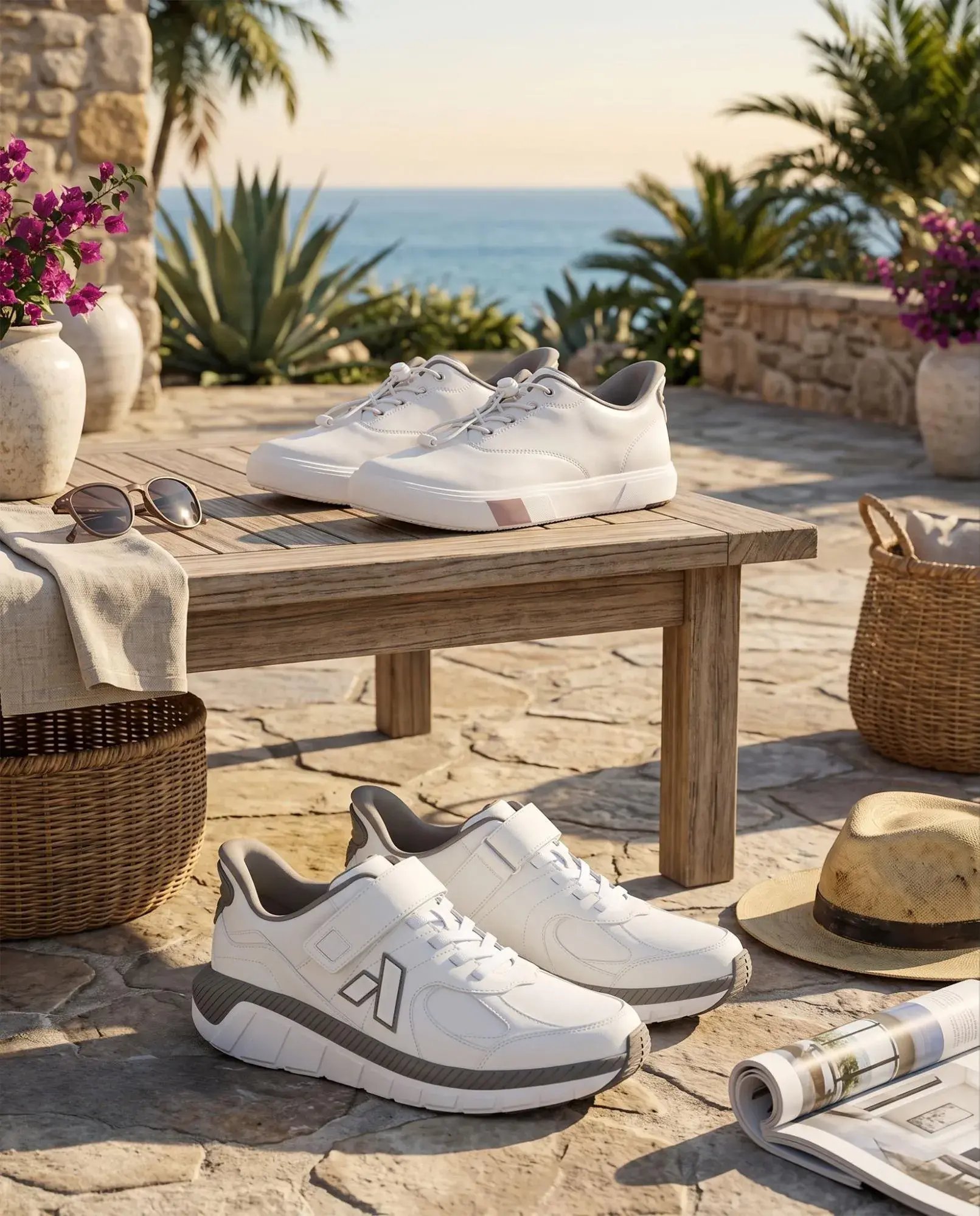
- [No. 17 Women's Sport Edge Hands Free](https://www.anodyneshoes.com/No.-17-Sport-Sprinter-w-Heel-Assist): a hybrid running/lifestyle shoe built with stretchable knit for lightweight, weightless-feeling comfort. Hands-free entry and an adjustable hook-and-loop closure give you a customized fit for every stride, while the rigid heel counter and strong shank keep the foot controlled.
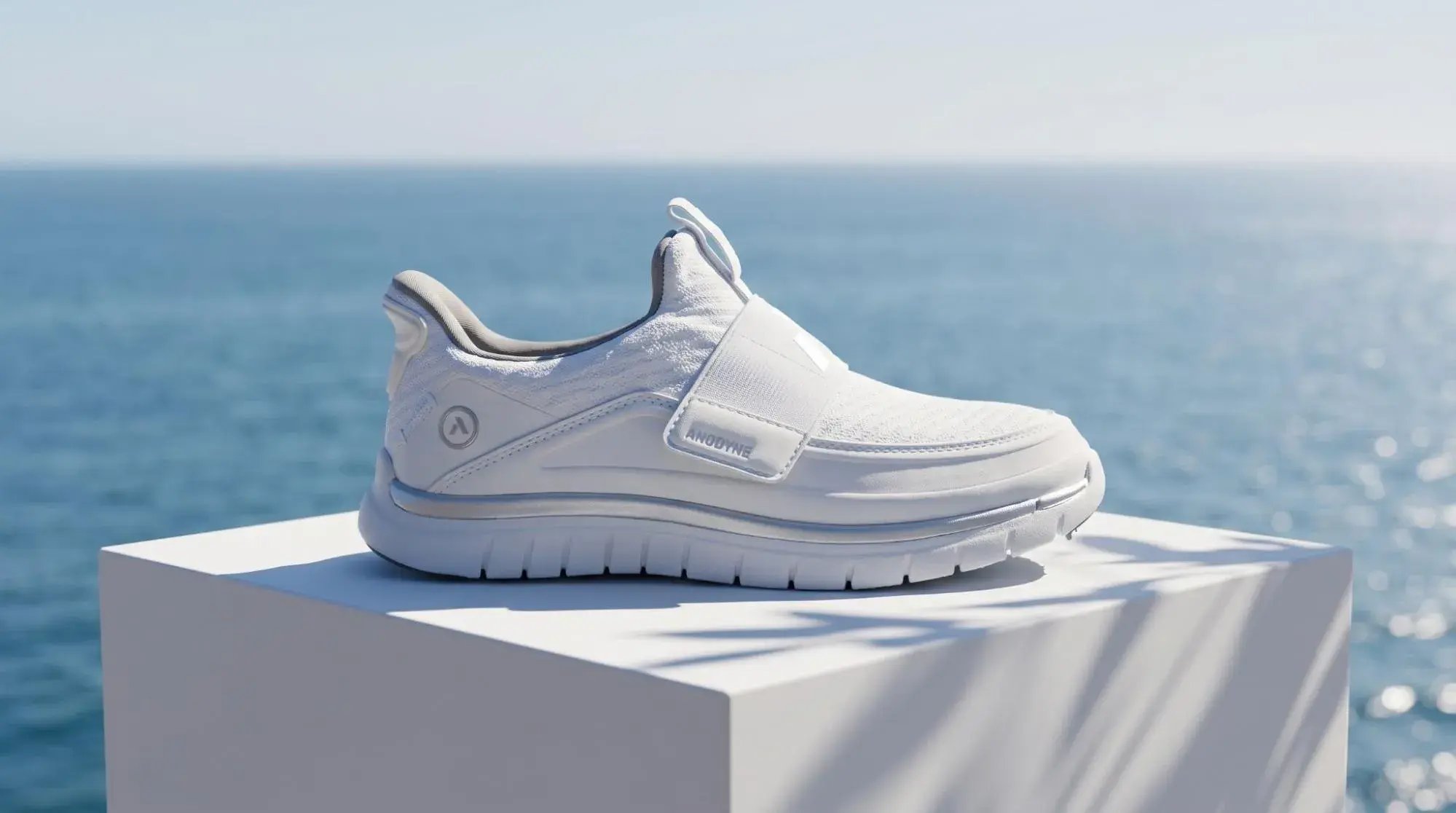
- [No. 48 Men's Sport Dash Hands Free](https://www.anodyneshoes.com/No.-48-Sport-Dash): a lighter option for people who want control without the bulk. The rigid heel counter and strong shank do the stabilizing work, while a lightweight outsole keeps fatigue down over long days.
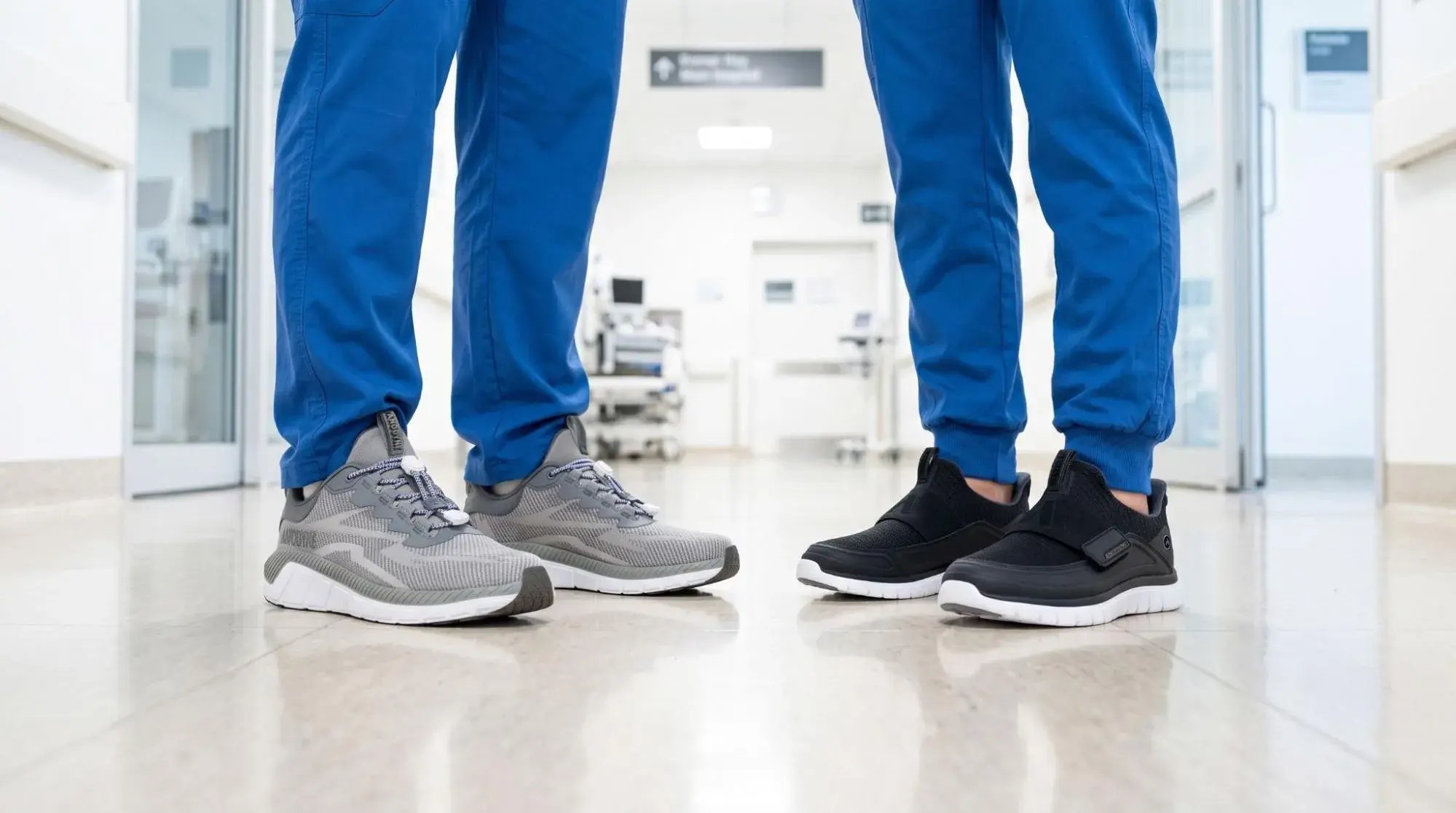
- [No. 23 Women's Sport Pace Hands Free](https://www.anodyneshoes.com/no-23-sport-runner-heel-assist): a supportive everyday pair that easily accommodates a custom orthotic.
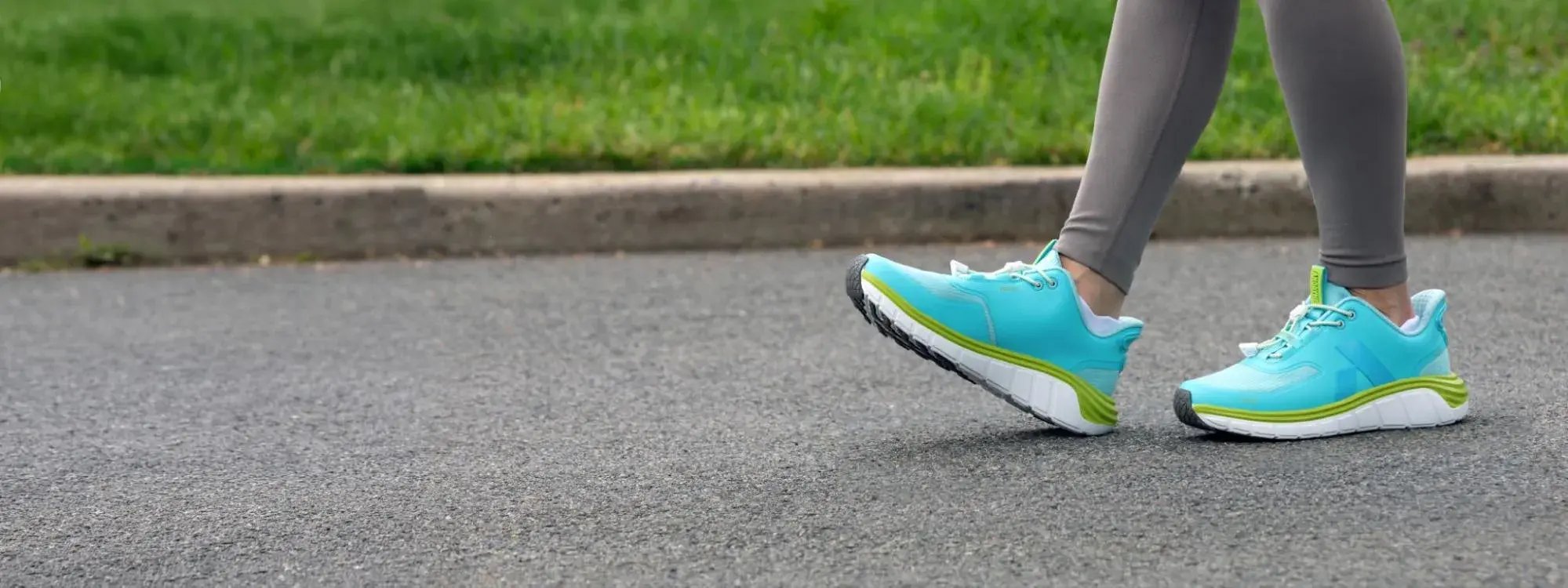
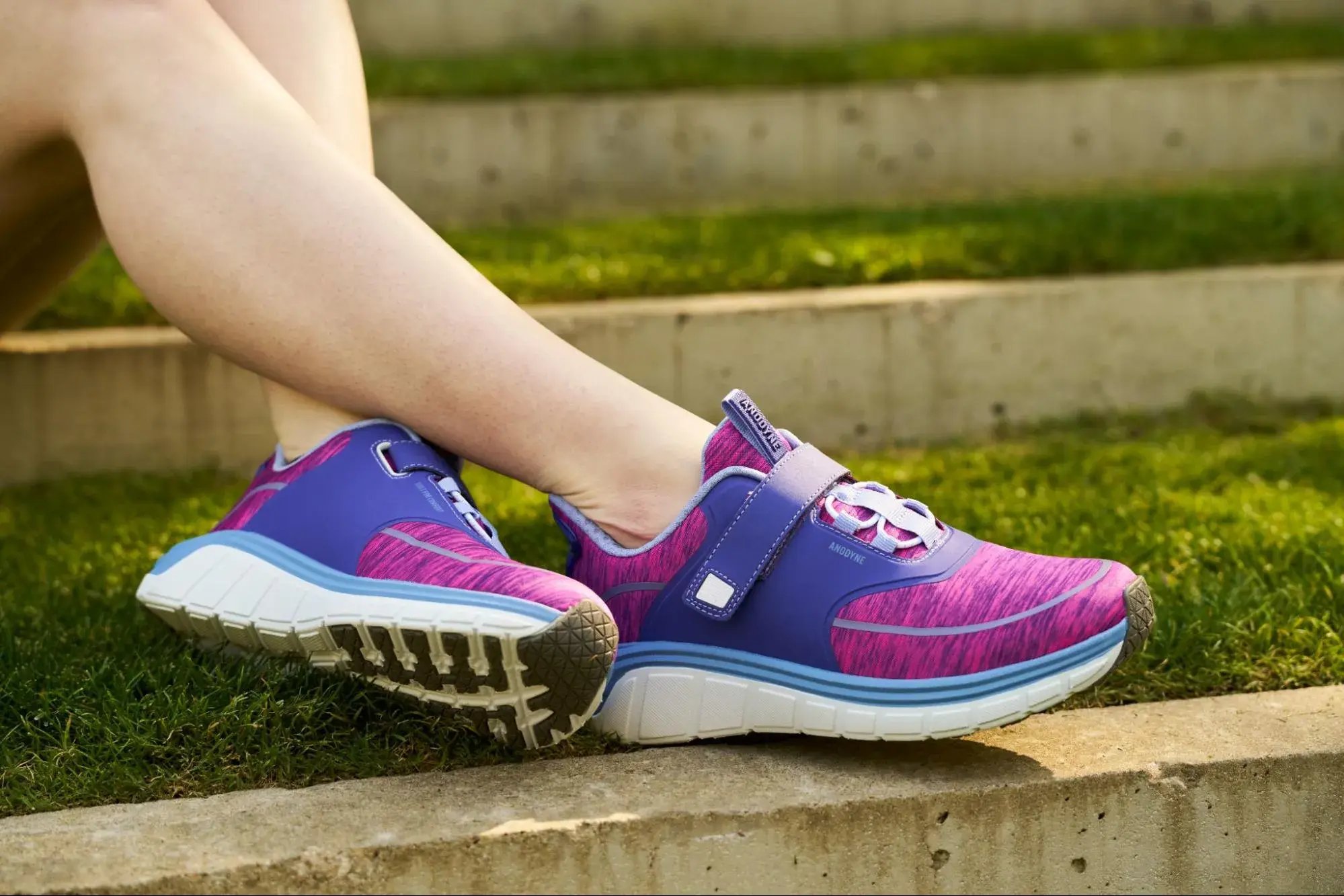
- [No. 45 Women's Sport Motion Hands Free](https://www.anodyneshoes.com/no-45-sport-jogger_2): cushioned enough for all-day wear, structured enough to limit rolling.
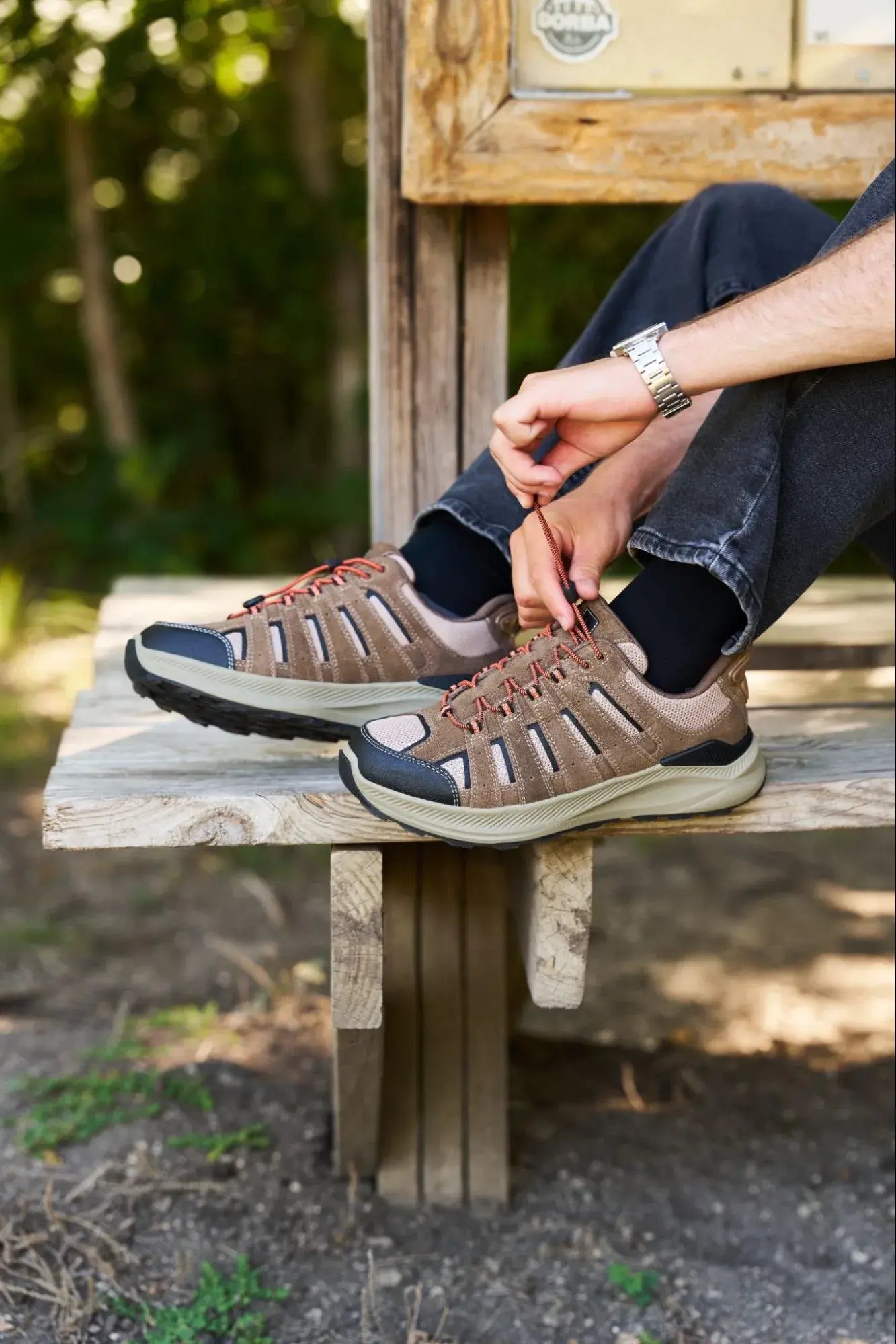
- [No. 44 Men's Trail Explorer](https://www.anodyneshoes.com/no-44-trail-walker_2): a firmer, more durable outsole for uneven ground.
Browse the full range of [motion control shoes](https://www.anodyneshoes.com/shop-by-feature/motion-control-shoes), or filter by [arch support](https://www.anodyneshoes.com/shop-by-feature/arch-support-shoes) and [heel counter stability](https://www.anodyneshoes.com/shop-by-feature/shoes-with-heel-counter-stability) if you already know which feature you need.
## Not Sure Where You Land?
Take your worn pair with you. A podiatrist, a physical therapist, or a good fitter can read more from your old soles than from anything you tell them.
There is plenty more to read while you decide. The [Anodyne blog](https://blog.anodyneshoes.com/) covers foot conditions, insoles, and footwear choices in the same detail, including [how to stay active with a foot condition](https://blog.anodyneshoes.com/how-to-stay-active-with-different-foot-conditions). Start wherever your feet hurt most.
## FAQs
### Can the best motion control shoes fix overpronation permanently?
No. They help control movement while you wear them. They do not change your foot structure. Strengthening exercises and orthotics can improve how your foot behaves over time, but the shoe manages the symptom rather than the cause.
### Do I need motion control shoes if I have flat feet but no pain?
Not necessarily. Plenty of people have low arches, pronate more than average, and never develop symptoms. Support is most helpful once pain, fatigue, or repeat injury shows up. If your feet feel fine, a well-fitted [stability shoe](https://www.anodyneshoes.com/shop-by-condition/shoes-for-flat-feet) is usually enough.
### How long do motion control shoes last?
The upper often outlives the support. The medial post and midsole compress with use, and once they flatten, the shoe stops controlling anything. Replace a pair when the firm side of the midsole feels the same as the soft side, or when old wear patterns come back quickly in a newer shoe.
### Can I use custom orthotics in motion control shoes?
Yes. Anodyne motion control styles are built with extra depth and a removable [insole](https://www.anodyneshoes.com/accessories/orthopedic-shoe-insoles), so a custom orthotic can go in without crowding the foot or changing how the shoe fits. The orthotic corrects your foot's alignment; the shoe's firm heel counter and medial post limit the rolling motion itself.
Topics: [Anodyne Blog](https://blog.anodyneshoes.com/topic/anodyne-blog), [Patient](https://blog.anodyneshoes.com/topic/patient), [Lifestyle](https://blog.anodyneshoes.com/topic/lifestyle)
.png?width=116&name=Anodyne_circle_1_logo%20(2).png)
Born and raised in the emergent city of Milwaukee, Wisconsin, Anodyne represents the core of an age-old Midwestern culture – pride, dedication and hard work. We’re a group of designers, fit experts, pedorthists, and most importantly, a group of friends that share a common goal.
### Stay up-to-date with our blog!
### Recent Posts
### Posts by Tag
- [Lifestyle (162)](https://blog.anodyneshoes.com/topic/lifestyle)
- [Patient (155)](https://blog.anodyneshoes.com/topic/patient)
- [Anodyne Blog (99)](https://blog.anodyneshoes.com/topic/anodyne-blog)
- [Recipes (46)](https://blog.anodyneshoes.com/topic/recipes)
- [Practitioner (41)](https://blog.anodyneshoes.com/topic/practitioner)
- [Diabetic Foot Care (37)](https://blog.anodyneshoes.com/topic/diabetic-foot-care)
- [Diabetes Blog (32)](https://blog.anodyneshoes.com/topic/diabetes-blog)
- [Foot Care (30)](https://blog.anodyneshoes.com/topic/foot-care)
- [Diabetic Shoes (24)](https://blog.anodyneshoes.com/topic/diabetic-shoes)
- [Diabetes Awareness (18)](https://blog.anodyneshoes.com/topic/diabetes-awareness)
- [Diabetes Diet (18)](https://blog.anodyneshoes.com/topic/diabetes-diet)
- [Custom Inserts (10)](https://blog.anodyneshoes.com/topic/custom-inserts)
- [Medicare Paperwork (9)](https://blog.anodyneshoes.com/topic/medicare-paperwork)
- [Anodyne Shoes (8)](https://blog.anodyneshoes.com/topic/anodyne-shoes)
- [Anodyne Scanner (3)](https://blog.anodyneshoes.com/topic/anodyne-scanner)
- [Neuropathy (2)](https://blog.anodyneshoes.com/topic/neuropathy)
- [Online Webinars (1)](https://blog.anodyneshoes.com/topic/online-webinars)
See all
Back to Top

-
-
-
- PRODUCTS
- [Women](https://www.anodyneshoes.com/women)
- [Men](https://www.anodyneshoes.com/men)
- [Slippers](https://www.anodyneshoes.com/accessories/orthopedic-slippers)
- [Socks](https://www.anodyneshoes.com/accessories/orthopedic-socks)
- [Sandals](https://www.anodyneshoes.com/accessories/orthopedic-sandals)
- [Inserts](https://www.anodyneshoes.com/accessories/orthopedic-shoe-insoles)
- HELP
- [Contact Us](https://www.anodyneshoes.com/contact-us)
- [FAQ](https://www.anodyneshoes.com/faq)
- [Become a Supplier](https://info.anodyneshoes.com/become-a-supplier)
- [Guest Order Status](https://www.anodyneshoes.com/guestorderstatus)
- [Shipping and Returns](https://www.anodyneshoes.com/shipping-and-returns-supplier)
- ABOUT US
- [Our Story](https://info.anodyneshoes.com/our-story)
- [Products](https://info.anodyneshoes.com/product)
- [Blog](https://blog.anodyneshoes.com/)
- [Laboratory](https://info.anodyneshoes.com/laboratory)
- LEGAL
- [Medicare](https://info.anodyneshoes.com/medicare)
- [Terms and Conditions](https://www.anodyneshoes.com/terms-and-conditions)
- [Privacy Policy](https://www.anodyneshoes.com/privacy-policy)
© 2019 Anodyne, LLC. All rights reserved.
 
```json
{
"@context" : "https://schema.org",
"@type" : "BlogPosting",
"author" : {
"@type" : "Person",
"name" : "Billy Kanter, CPED",
"url" : "https://blog.anodyneshoes.com/author/billy-kanter"
},
"dateModified" : "2026-08-03T00:02:14.823Z",
"datePublished" : "2026-08-03T00:02:14.000Z",
"headline" : "Motion Control Shoes: Signs You Might Need Them",
"image" : [ "https://blog.anodyneshoes.com/hubfs/Anodyne%20motion%20control%20shoes.webp" ],
"mainEntityOfPage" : {
"@id" : "https://blog.anodyneshoes.com/signs-you-need-motion-control-shoes",
"@type" : "WebPage"
},
"publisher" : {
"@type" : "Organization",
"logo" : {
"@type" : "ImageObject",
"url" : "https://blog.anodyneshoes.com/hubfs/Anodyne_A_logo-1.png"
},
"name" : "Anodyne"
}
}
```
```json
{
"@context" : "https://schema.org",
"@type" : "FAQPage",
"mainEntity" : [ {
"@type" : "Question",
"acceptedAnswer" : {
"@type" : "Answer",
"text" : "No. They help control movement while you wear them. They do not change your foot structure. Strengthening exercises and orthotics can improve how your foot behaves over time, but the shoe manages the symptom rather than the cause."
},
"name" : "Can the best motion control shoes fix overpronation permanently?"
}, {
"@type" : "Question",
"acceptedAnswer" : {
"@type" : "Answer",
"text" : "Not necessarily. Plenty of people have low arches, pronate more than average, and never develop symptoms. Support is most helpful once pain, fatigue, or repeat injury shows up. If your feet feel fine, a well-fitted stability shoe is usually enough."
},
"name" : "Do I need motion control shoes if I have flat feet but no pain?"
}, {
"@type" : "Question",
"acceptedAnswer" : {
"@type" : "Answer",
"text" : "The upper often outlives the support. The medial post and midsole compress with use, and once they flatten, the shoe stops controlling anything. Replace a pair when the firm side of the midsole feels the same as the soft side, or when old wear patterns come back quickly in a newer shoe."
},
"name" : "How long do motion control shoes last?"
}, {
"@type" : "Question",
"acceptedAnswer" : {
"@type" : "Answer",
"text" : "Yes. Anodyne motion control styles are built with extra depth and a removable insole, so a custom orthotic can go in without crowding the foot or changing how the shoe fits. The orthotic corrects your foot's alignment; the shoe's firm heel counter and medial post limit the rolling motion itself."
},
"name" : "Can I use custom orthotics in motion control shoes?"
} ]
}
```