---
title: "Shoes for Swollen Feet: How To Choose & Features to Look For"
description: Shoes for swollen feet work best with stretch uppers, adjustable straps, and extra depth. Learn the features that keep feet comfortable all day.
image: https://blog.anodyneshoes.com/hubfs/woman%20needing%20shoes%20for%20swollen%20feet.webp
---
Free Shipping!
- [Login](https://www.anodyneshoes.com/scs/checkout.ssp?is=login&login=T&fragment=login-register&_ga=2.139944311.594202185.1705327965-1966822928.1699636057#login-register)
- or [Register](https://www.anodyneshoes.com/scs/checkout.ssp?is=register&login=T&reset=T&newcust=T&fragment=login-register&client_id=1199613585.1708380270&session_id=1719409087&_ga=2.45544804.1172352323.1719240659-1199613585.1708380270&_gac=1.258274936.1716234967.Cj0KCQjw8pKxBhD_ARIsAPrG45k9qU5DfAG8y_1QdNe8IHWhfV_eqn7H2BBlnEOM62vuRDJpu_0TWhsaAuXdEALw_wcB#login-register)
[](http://www.anodyneshoes.com/)
- [WOMEN](https://www.anodyneshoes.com/women)
- [Shoes](https://www.anodyneshoes.com/women/shoes)
- [Sport](https://www.anodyneshoes.com/women/shoes/sport)
- [Trail](https://www.anodyneshoes.com/women/shoes/trail)
- [Casual](https://www.anodyneshoes.com/women/shoes/Casual)
- [Slippers](https://www.anodyneshoes.com/women/slippers)
- [Sandals](https://www.anodyneshoes.com/women/sandals)
- [Socks](https://www.anodyneshoes.com/women/socks)
- [Insoles](https://www.anodyneshoes.com/women/insoles)
- [Multi Density Orthotics](https://www.anodyneshoes.com/women/insoles/womens-multi-density-orthotics)
- [Gel Insoles](https://www.anodyneshoes.com/women/insoles/gel-insoles)
- [Rx Inserts](https://www.anodyneshoes.com/women/insoles/rx-insoles)
- [MEN](https://www.anodyneshoes.com/men)
- [Shoes](https://www.anodyneshoes.com/men/shoes)
- [Sport](https://www.anodyneshoes.com/men/shoes/sport)
- [Trail](https://www.anodyneshoes.com/men/shoes/trail)
- [Casual](https://www.anodyneshoes.com/men/shoes/Casual)
- [Slippers](https://www.anodyneshoes.com/men/slippers)
- [Sandals](https://www.anodyneshoes.com/men/sandals)
- [Socks](https://www.anodyneshoes.com/men/socks)
- [Insoles](https://www.anodyneshoes.com/men/insoles)
- [Multi Density Orthotics](https://www.anodyneshoes.com/men/insoles/mens-multi-density-orthotics)
- [Gel Insoles](https://www.anodyneshoes.com/men/insoles/gel-insoles)
- [Rx Insoles](https://www.anodyneshoes.com/men/insoles/rx-insoles)
- [ALL](https://www.anodyneshoes.com/accessories)
- [Shoes](https://www.anodyneshoes.com/accessories/shoes)
- [Slippers](https://www.anodyneshoes.com/accessories/orthopedic-slippers)
- [Sandals](https://www.anodyneshoes.com/accessories/orthopedic-sandals)
- [Socks](https://www.anodyneshoes.com/accessories/orthopedic-socks)
- [Diabetic Socks](https://www.anodyneshoes.com/accessories/orthopedic-socks/diabetic-socks)
- [Bunion Socks](https://www.anodyneshoes.com/accessories/orthopedic-socks/bunion-socks)
- [Insoles](https://www.anodyneshoes.com/accessories/orthopedic-shoe-insoles)
- [Multi Density Orthotics](https://www.anodyneshoes.com/accessories/orthopedic-shoe-insoles/multi-density-orthotics)
- [Gel Insoles](https://www.anodyneshoes.com/accessories/orthopedic-shoe-insoles/gel-insoles)
- [Rx Insoles](https://www.anodyneshoes.com/accessories/orthopedic-shoe-insoles/rx-insoles)
- [Shoe Care](https://www.anodyneshoes.com/accessories/shoe-care)
- [Education](https://www.anodyneshoes.com/accessories/Education)
- [Supplier](https://www.anodyneshoes.com/accessories/supplier)
- [Displays](https://www.anodyneshoes.com/accessories/supplier/displays)
- [Collateral](https://www.anodyneshoes.com/accessories/supplier/collateral)
- [Impression Foam](https://www.anodyneshoes.com/accessories/supplier/impression-foam)
- [SHOP CONDITIONS](https://www.anodyneshoes.com/shop-by-condition)
- [Diabetes](https://www.anodyneshoes.com/shop-by-condition/diabetic-shoes)
- [Neuropathy](https://www.anodyneshoes.com/shop-by-condition/shoes-for-neuropathy)
- [Bunions](https://www.anodyneshoes.com/shop-by-condition/shoes-for-bunions)
- [Swollen Feet](https://www.anodyneshoes.com/shop-by-condition/shoes-for-swollen-feet)
- [Hammertoe](https://www.anodyneshoes.com/shop-by-condition/shoes-for-hammertoe)
- [Heel Pain](https://www.anodyneshoes.com/shop-by-condition/shoes-for-heel-pain)
- [Plantar Fasciitis](https://www.anodyneshoes.com/shop-by-condition/shoes-for-plantar-fasciitis)
- [Flat Feet](https://www.anodyneshoes.com/shop-by-condition/shoes-for-flat-feet)
- [Heel Spurs](https://www.anodyneshoes.com/shop-by-condition/shoes-for-heel-spurs)
- [Charcot Foot](https://www.anodyneshoes.com/shop-by-condition/shoes-for-charcot-foot)
- [SHOP FEATURES](https://www.anodyneshoes.com/shop-by-feature)
- [Slip-Resistant Shoes](https://www.anodyneshoes.com/shop-by-feature/slip-resistant-shoes)
- [Arch Support Shoes](https://www.anodyneshoes.com/shop-by-feature/arch-support-shoes)
- [Strap Closure Shoes](https://www.anodyneshoes.com/shop-by-feature/strap-closure-shoes)
- [Therapeutic Shoes](https://www.anodyneshoes.com/shop-by-feature/therapeutic-shoes)
- [No Tie Lace Shoes](https://www.anodyneshoes.com/shop-by-feature/no-tie-lace-shoes)
- [Vegan Friendly Shoes](https://www.anodyneshoes.com/shop-by-feature/vegan-friendly-shoes)
- [Extra Wide Shoes](https://www.anodyneshoes.com/shop-by-feature/extra-wide-shoes)
- [Shoes for AFO's & Braces](https://www.anodyneshoes.com/shop-by-feature/shoes-for-afos-braces)
- [Wide Toe Box Shoes](https://www.anodyneshoes.com/shop-by-feature/wide-toe-box-shoes)
- [Stretchable Shoes](https://www.anodyneshoes.com/shop-by-feature/stretchable-shoes)
- [Extra Depth Shoes](https://www.anodyneshoes.com/shop-by-feature/extra-depth-shoes)
- [Double Depth Shoes](https://www.anodyneshoes.com/shop-by-feature/double-depth-shoes)
- [Shoes With Removable Inserts](https://www.anodyneshoes.com/shop-by-feature/shoes-with-removable-inserts)
- [Motion Control Shoes](https://www.anodyneshoes.com/shop-by-feature/motion-control-shoes)
- [Shoes With Heel Counter Stability](https://www.anodyneshoes.com/shop-by-feature/shoes-with-heel-counter-stability)
- [LOCATIONS](https://www.anodyneshoes.com/locations)
- [ABOUT US](https://info.anodyneshoes.com/our-story)
- [Our Story](https://info.anodyneshoes.com/our-story)
- [Our Products](https://info.anodyneshoes.com/product)
- [Our Lab](https://info.anodyneshoes.com/laboratory)
- [Our Blog](https://blog.anodyneshoes.com)
-
-
-
Go
# Shoes for Swollen Feet: Features to Look For
Posted by [Billy Kanter, CPED](https://blog.anodyneshoes.com/author/billy-kanter) on Aug 24, 2026, 6:28:00 PM
Find me on:
[LinkedIn](https://www.linkedin.com/in/billy-kanter-a73b74101/)
- [Tweet](https://twitter.com/share)
Try this tonight. Take off the shoes you wore all day, and look at the top of your foot. If you can see the outline of the laces pressed into your skin, your footwear ran out of room somewhere around lunchtime.
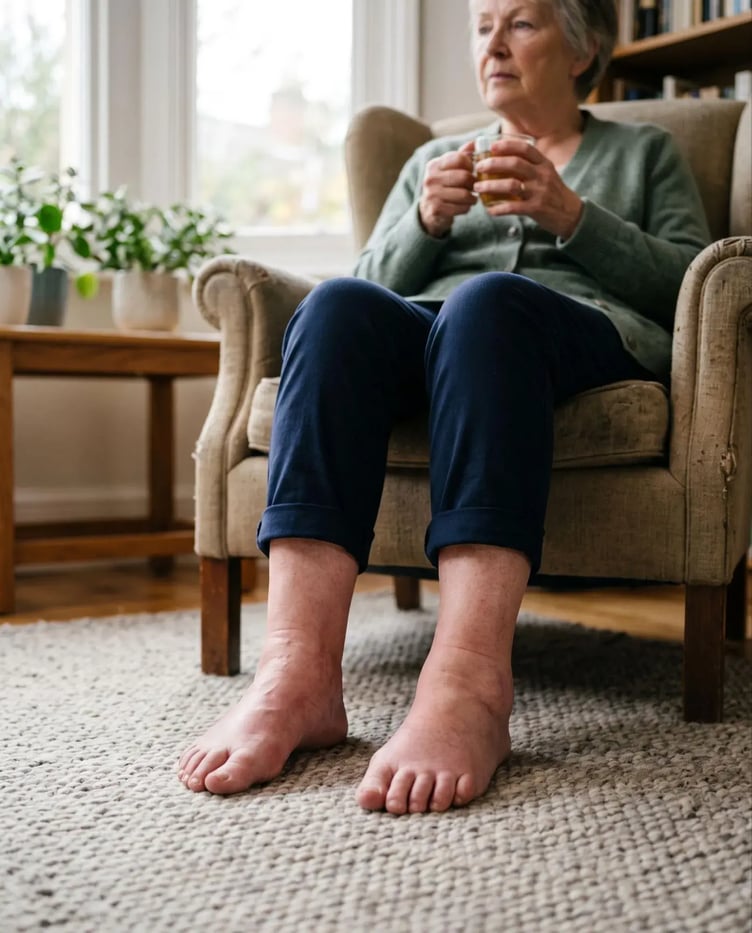
Swelling progresses. It builds through the morning, peaks by late afternoon, and settles overnight. Most footwear holds one shape through all of it, which leaves your feet negotiating with a fixed space that keeps shrinking around them.
The good news is that the right features solve this. Shoes for swollen feet earn their place through five things: uppers that stretch, wide widths, closures you can adjust, depth that gives volume back, and cushioning that stays gentle on tender skin. Here is what each one does and how to spot it.
## Why Feet Swell in the First Place
Swelling happens when fluid collects in the tissue of the lower legs, ankles, and feet. Gravity pulls that fluid downward through the day, and your circulatory system works against gravity to move it back up. When that return system slows down for any reason, fluid stays where it lands.
Plenty of things slow it down. Poor circulation and venous insufficiency top the list, especially with age, as the valves in the leg veins lose efficiency. Diabetes damages small blood vessels over time, which is why[diabetic foot care](https://blog.anodyneshoes.com/the-dos-and-donts-of-diabetic-foot-care) puts so much weight on daily foot checks. Pregnancy increases blood volume and adds pressure on the veins in the pelvis. Arthritis brings inflammation directly into the joints of the foot and ankle. Heart, kidney, and thyroid conditions all affect fluid balance, and common medications, including blood pressure drugs, steroids, and hormone treatments, list swelling as a side effect. Add salty meals, hot weather, injury, and long hours seated or standing, and most people meet several triggers in the same week.
That daily range matters more than the peak. A shoe fitted to your morning foot presses hard by 4pm. A shoe fitted to your evening foot slides around at breakfast. Footwear that flexes across the whole range keeps you comfortable at both ends.
Standing jobs deserve their own mention. Retail, healthcare, hospitality, and factory work keep you upright for hours with little chance to elevate your legs, which is a reliable recipe for afternoon swelling. Our guide to[easing work-related foot pain](https://blog.anodyneshoes.com/ease-work-related-foot-pain-discover-your-solutions) covers what helps during and after a shift.
Watch for redness, shiny skin, or marks that stay pressed into the foot after you remove your shoes. Those are signs your current pair is working against you, and worth mentioning to your doctor if they persist.
### Stretchable Uppers That Move With Your Feet
Rigid leather holds one shape. Stretch materials hold your shape, which is a meaningful difference once swelling arrives.
When shopping for shoes for swollen feet, look for knit uppers or panels of stretch fabric across the forefoot and instep. These flex outward as swelling increases, then return to normal as it recedes. Your foot gets extra room exactly where it needs it, and the shoe keeps its structure everywhere else.
Stretch also protects sensitive skin. Swollen feet bruise and blister more easily, so an upper that gives way under pressure keeps rubbing to a minimum. Browse[stretchable shoes](https://www.anodyneshoes.com/shop-by-feature/stretchable-shoes) to see how the panels sit.
### Adjustable Closures Put You in Control
Laces work in one direction: tighter. Adjustable straps work in both.
Hook-and-loop closures let you loosen the fit in seconds when your feet expand, then snug it back down the next morning. That single adjustment covers most of the daily swelling range. Look at[strap closure styles](https://www.anodyneshoes.com/shop-by-feature/strap-closure-shoes) for the widest span of adjustment.
Hands-free entry helps too. Bending down to manage laces becomes harder with swollen ankles, limited mobility, or a pregnancy bump in the way.[Slip-in shoes](https://www.anodyneshoes.com/shop-by-feature/slip-in-shoes) with a collapsible heel let you step in standing up and keep a secure hold once you are inside.
### Extra Depth and Room Across the Toes
Swelling adds volume, not just width. Fluid builds vertically across the top of the foot, which puts pressure on the instep well before the sides feel tight.
[Extra depth shoes](https://www.anodyneshoes.com/shop-by-feature/extra-depth-shoes) add interior height so the upper clears the top of the foot as swelling peaks.[Double depth styles](https://www.anodyneshoes.com/shop-by-feature/double-depth-shoes) go further, which suits severe edema, braces, or thicker custom orthotics.
Width matters alongside depth. A[wide toe box](https://www.anodyneshoes.com/shop-by-feature/wide-toe-box-shoes) keeps swollen toes spread naturally and reduces friction between them. Pair it with[extra wide widths](https://www.anodyneshoes.com/shop-by-feature/extra-wide-shoes) if your forefoot spreads through the day.
### Cushioning and Support That Stay Kind to Tender Skin
Swollen feet feel every hard surface more sharply. Cushioned midsoles absorb impact so each step lands softer through the heel and forefoot.
Support keeps that cushioning useful.[Arch support](https://www.anodyneshoes.com/shop-by-feature/arch-support-shoes) holds the midfoot steady and spreads load evenly across the sole, which keeps pressure off any single spot. A firm heel counter adds stability, which helps when swelling makes your footing feel less certain.
Removable insoles give you one more lever. You can take them out to reclaim depth on heavy swelling days, or swap in[custom orthotics](https://www.anodyneshoes.com/accessories/orthopedic-shoe-insoles) when you need targeted correction. Seamless linings finish the job by keeping the interior smooth against fragile skin.
## The Best Shoes for Long Flights
Air travel concentrates every swelling trigger into a few hours. Cabin pressure, still legs, and a folded sitting position slow circulation right when you have the least room to move.
The best shoes for long flights share one trait: adjustability you can reach while seated. Hands-free entry and hook-and-loop straps let you loosen your fit mid-flight and tighten it again before landing.
If you want the best footwear for long flights, choose a lightweight pair with stretch across the forefoot, then add compression socks to support blood flow through the leg. Walk the aisle every hour or two and flex your ankles at your seat. Keep your shoes on through the flight so your feet stay supported when swelling arrives.
## Anodyne Styles Built for Feet That Swell
Every Anodyne pair starts from the same base: extra depth, a removable insole, a wide toe box, and a firm heel counter. What separates these six is style and activity. Match the style to when your swelling peaks and where it sits.
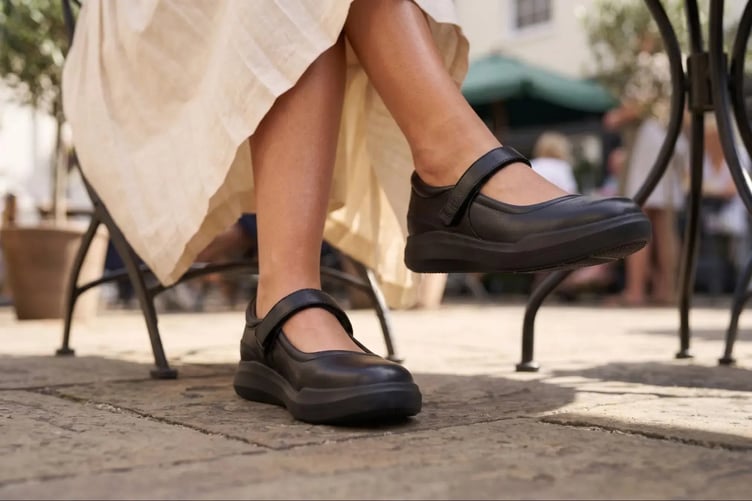
- [No. 33 Women's Casual Mary Jane Stretch](https://www.anodyneshoes.com/no-33-casual-mary-jane-stretch_2)
Stretch panels run across the forefoot and instep, so the shoe widens through the afternoon rather than pressing back. A single hook-and-loop strap crosses the instep, giving you one clean adjustment point right where volume builds fastest. It's a genuinely cute style, which is rare in footwear built this way, so you're not trading looks for comfort. Choose it for workdays and occasions where a sneaker feels too casual.
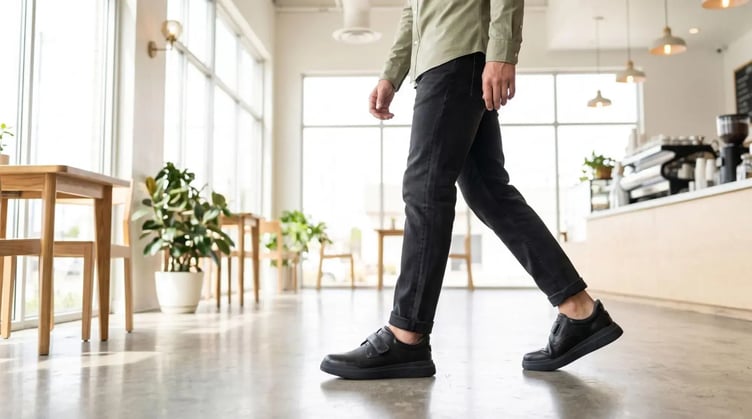
- [No. 66 Men's Casual Comfort Stretch Hands Free](https://www.anodyneshoes.com/no-66-casual-comfort-stretch_2)
Stretch construction with Anodyne's Hands Free feature, so you step in without needing to bend down. The leather-look finish works for dinner, a wedding, or a day at the desk, and the stretch upper moves with your foot as the hours add up. Still fits and feels good at the end of the day.
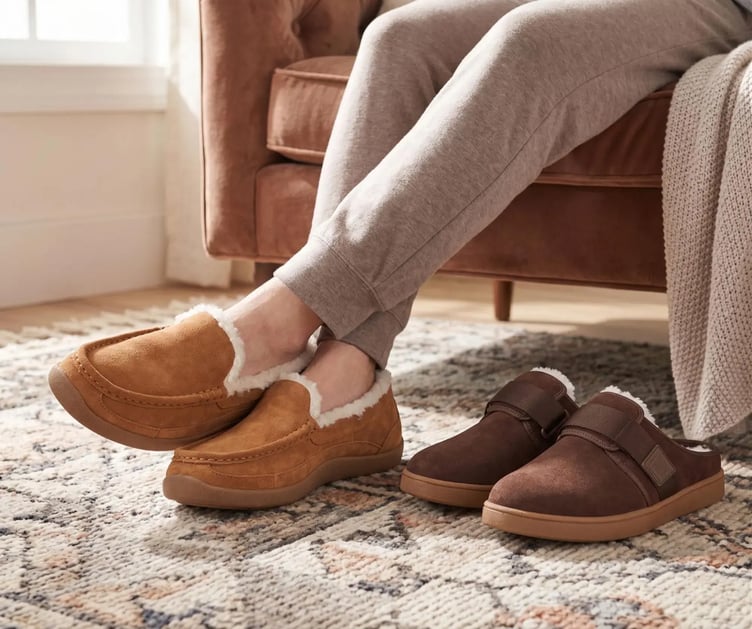
- [No. 39 Women's Slipper Moc Toe](https://www.anodyneshoes.com/no-39-slipper-moc-toe)
A closed, softly lined slipper with real support underneath, built for the hours when your feet are at their largest. The upper gives where standard house shoes press, and the removable insole lets you reclaim depth on heavy swelling evenings. This is the pair for recovery time at home.
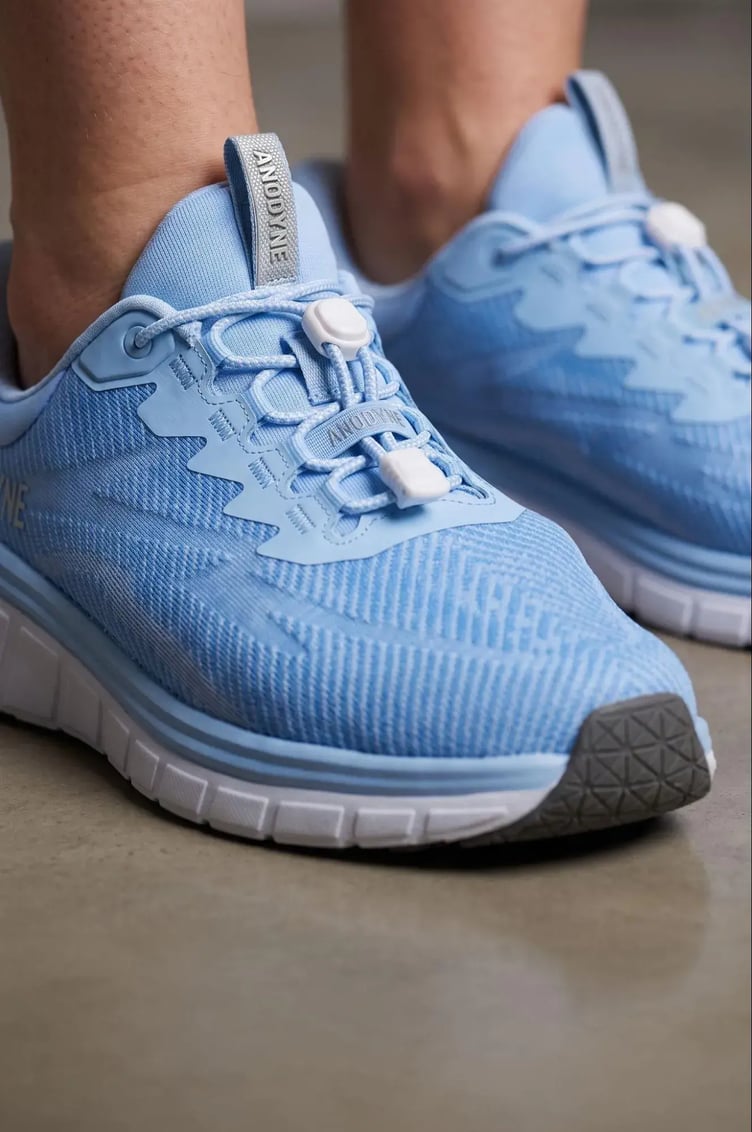
- [No. 59 Women's Sport Dash Hands Free](https://www.anodyneshoes.com/No.-59-Sport-Dash)
Lightweight engineered mesh gives as your feet swell, so the upper follows the change through the day instead of pressing back against it. The Hands Free heel lets you step straight in, no bending down and nothing to adjust once your shoes are on. At 7.2 ounces with a slip-resistant outsole, this is the pair for travel days and long hours upright.
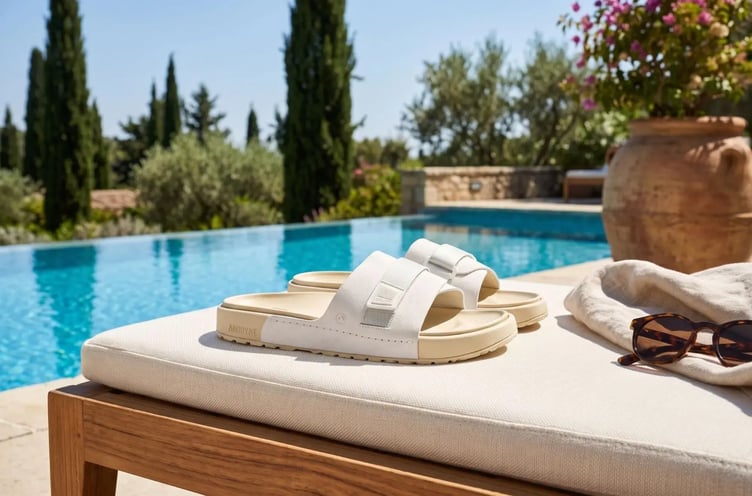
- [No. 65 Women's Slide Sandal](https://www.anodyneshoes.com/no-65-slide-sandal)
Adjustable straps with a supportive contoured footbed underneath, so peak swelling gets open air and your arch keeps its support. Warm weather, errands, and the hours right after a long shift. More on why this works in our guide to[orthopedic sandals and foot health](https://blog.anodyneshoes.com/how-orthopedic-sandals-promote-foot-health-and-relaxation).
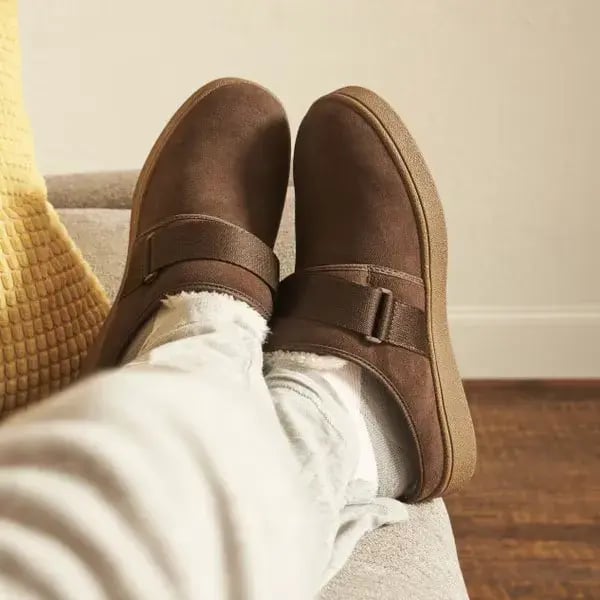
- [No. 92 Men's Slipper Open Back](https://www.anodyneshoes.com/no-92-slipper-open-back)
Open-back construction with genuine arch support inside, made for evenings when your feet reach their largest. The hook-and-loop closure adjusts as you settle in. Many people find this the pair they wear most, simply because it fits when everything else stops.
Browse the full range of[shoes for swollen feet](https://www.anodyneshoes.com/shop-by-condition/shoes-for-swollen-feet), or start with[women's styles](https://www.anodyneshoes.com/women) and[men's styles](https://www.anodyneshoes.com/men) if you already know your size.
## Start With One Change: Measure Your Feet in the Evening
Most people size their shoes at their smallest and wear them at their largest. Reversing that single habit does more for daily comfort than any individual feature on this list.
Measure at the end of the day, when swelling has peaked. Wear the socks you actually use, including[compression socks](https://www.anodyneshoes.com/women/socks) if they are part of your routine, since both change the numbers. Write down length and width for each foot separately, because feet rarely match.
Then buy for that measurement and let adjustability handle the rest. A strap you can tighten in the morning is far kinder than a shoe you have to force on at night. If you are between sizes, take the larger one and use the closure to hold your foot steady.
When you are ready to shop, start from the[swollen feet collection](https://www.anodyneshoes.com/shop-by-condition/shoes-for-swollen-feet) and filter by the feature that matters most to you: stretch, straps, or depth. If you want to keep reading first, the[Anodyne foot care blog](https://blog.anodyneshoes.com/topic/foot-care) covers conditions, insoles, and fit in the same detail.
## FAQs
### How much room should shoes for swollen feet have?
Aim for about a thumb's width past your longest toe, measured in the evening. Across the width, your foot should sit flat with the sides of the shoe touching lightly. Adjustable straps then handle the daily variation from there.
### Are sandals a good option for swollen feet?
Yes, particularly during warm weather and at peak swelling. Adjustable straps expand as far as you need, and open construction keeps the top of the foot completely free. Choose a supportive footbed rather than a flat sole so your arch stays held.
### Can I wear custom orthotics if my feet swell?
Yes. Extra depth and removable insoles leave room for a custom orthotic and still clear the top of the foot. On heavier swelling days, some people remove the orthotic and use the factory insole to reclaim volume.
### Does swelling in one foot mean something different?
Often it does. Swelling in both feet usually relates to circulation, standing, or fluid retention. Swelling in one foot alone points more toward injury, infection, or a local cause, and it deserves a conversation with your doctor before you focus on footwear.
Topics: [Anodyne Blog](https://blog.anodyneshoes.com/topic/anodyne-blog), [Patient](https://blog.anodyneshoes.com/topic/patient), [Lifestyle](https://blog.anodyneshoes.com/topic/lifestyle)
.png?width=116&name=Anodyne_circle_1_logo%20(2).png)
Born and raised in the emergent city of Milwaukee, Wisconsin, Anodyne represents the core of an age-old Midwestern culture – pride, dedication and hard work. We’re a group of designers, fit experts, pedorthists, and most importantly, a group of friends that share a common goal.
### Stay up-to-date with our blog!
### Recent Posts
### Posts by Tag
- [Lifestyle (164)](https://blog.anodyneshoes.com/topic/lifestyle)
- [Patient (157)](https://blog.anodyneshoes.com/topic/patient)
- [Anodyne Blog (101)](https://blog.anodyneshoes.com/topic/anodyne-blog)
- [Recipes (46)](https://blog.anodyneshoes.com/topic/recipes)
- [Practitioner (41)](https://blog.anodyneshoes.com/topic/practitioner)
- [Diabetic Foot Care (37)](https://blog.anodyneshoes.com/topic/diabetic-foot-care)
- [Diabetes Blog (32)](https://blog.anodyneshoes.com/topic/diabetes-blog)
- [Foot Care (30)](https://blog.anodyneshoes.com/topic/foot-care)
- [Diabetic Shoes (24)](https://blog.anodyneshoes.com/topic/diabetic-shoes)
- [Diabetes Awareness (18)](https://blog.anodyneshoes.com/topic/diabetes-awareness)
- [Diabetes Diet (18)](https://blog.anodyneshoes.com/topic/diabetes-diet)
- [Custom Inserts (10)](https://blog.anodyneshoes.com/topic/custom-inserts)
- [Medicare Paperwork (9)](https://blog.anodyneshoes.com/topic/medicare-paperwork)
- [Anodyne Shoes (8)](https://blog.anodyneshoes.com/topic/anodyne-shoes)
- [Anodyne Scanner (3)](https://blog.anodyneshoes.com/topic/anodyne-scanner)
- [Neuropathy (2)](https://blog.anodyneshoes.com/topic/neuropathy)
- [Online Webinars (1)](https://blog.anodyneshoes.com/topic/online-webinars)
See all
Back to Top

-
-
-
- PRODUCTS
- [Women](https://www.anodyneshoes.com/women)
- [Men](https://www.anodyneshoes.com/men)
- [Slippers](https://www.anodyneshoes.com/accessories/orthopedic-slippers)
- [Socks](https://www.anodyneshoes.com/accessories/orthopedic-socks)
- [Sandals](https://www.anodyneshoes.com/accessories/orthopedic-sandals)
- [Inserts](https://www.anodyneshoes.com/accessories/orthopedic-shoe-insoles)
- HELP
- [Contact Us](https://www.anodyneshoes.com/contact-us)
- [FAQ](https://www.anodyneshoes.com/faq)
- [Become a Supplier](https://info.anodyneshoes.com/become-a-supplier)
- [Guest Order Status](https://www.anodyneshoes.com/guestorderstatus)
- [Shipping and Returns](https://www.anodyneshoes.com/shipping-and-returns-supplier)
- ABOUT US
- [Our Story](https://info.anodyneshoes.com/our-story)
- [Products](https://info.anodyneshoes.com/product)
- [Blog](https://blog.anodyneshoes.com/)
- [Laboratory](https://info.anodyneshoes.com/laboratory)
- LEGAL
- [Medicare](https://info.anodyneshoes.com/medicare)
- [Terms and Conditions](https://www.anodyneshoes.com/terms-and-conditions)
- [Privacy Policy](https://www.anodyneshoes.com/privacy-policy)
© 2019 Anodyne, LLC. All rights reserved.
 
```json
{
"@context" : "https://schema.org",
"@type" : "BlogPosting",
"author" : {
"@type" : "Person",
"name" : "Billy Kanter, CPED",
"url" : "https://blog.anodyneshoes.com/author/billy-kanter"
},
"dateModified" : "2026-08-24T23:29:51.482Z",
"datePublished" : "2026-08-24T23:28:00.000Z",
"headline" : "Shoes for Swollen Feet: How To Choose & Features to Look For",
"image" : [ "https://blog.anodyneshoes.com/hubfs/woman%20needing%20shoes%20for%20swollen%20feet.webp" ],
"mainEntityOfPage" : {
"@id" : "https://blog.anodyneshoes.com/how-to-choose-shoes-for-swollen-feet",
"@type" : "WebPage"
},
"publisher" : {
"@type" : "Organization",
"logo" : {
"@type" : "ImageObject",
"url" : "https://blog.anodyneshoes.com/hubfs/Anodyne_A_logo-1.png"
},
"name" : "Anodyne"
}
}
```
```json
{
"@context" : "https://schema.org",
"@type" : "FAQPage",
"mainEntity" : [ {
"@type" : "Question",
"acceptedAnswer" : {
"@type" : "Answer",
"text" : "Aim for about a thumb's width past your longest toe, measured in the evening. Across the width, your foot should sit flat with the sides of the shoe touching lightly. Adjustable straps then handle the daily variation from there."
},
"name" : "How much room should shoes for swollen feet have?"
}, {
"@type" : "Question",
"acceptedAnswer" : {
"@type" : "Answer",
"text" : "Yes, particularly during warm weather and at peak swelling. Adjustable straps expand as far as you need, and open construction keeps the top of the foot completely free. Choose a supportive footbed rather than a flat sole so your arch stays held."
},
"name" : "Are sandals a good option for swollen feet?"
}, {
"@type" : "Question",
"acceptedAnswer" : {
"@type" : "Answer",
"text" : "Yes. Extra depth and removable insoles leave room for a custom orthotic and still clear the top of the foot. On heavier swelling days, some people remove the orthotic and use the factory insole to reclaim volume."
},
"name" : "Can I wear custom orthotics if my feet swell?"
}, {
"@type" : "Question",
"acceptedAnswer" : {
"@type" : "Answer",
"text" : "Often it does. Swelling in both feet usually relates to circulation, standing, or fluid retention. Swelling in one foot alone points more toward injury, infection, or a local cause, and it deserves a conversation with your doctor before you focus on footwear."
},
"name" : "Does swelling in one foot mean something different?"
} ]
}
```